Showing posts with label dance. Show all posts

Thursday, January 13, 2022

Interview: Faye Lim

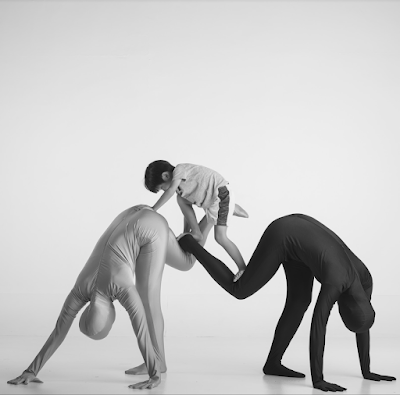
two dancers, one wearing a white full-body suit and the other a black one, supporting a small child with their feet
Faye's son supported by dancers in a work by Rolypoly Family,
image by Larry Toh Photography
Faye Lim is a dancer and movement-maker.  She is a mother, an educator, and an advocate for parenting artists. Her choreography and direction have been presented in public spaces, stages, and galleries in Singapore and internationally. As co-director of Derring-Do Dance, she makes body-based artworks and programs through Movement Arts and Rolypoly Family for diverse children and their families. Her training and experience span the fields of the arts, education, non-profit impact research and sexuality education consulting. At the start of the COVID-19 pandemic, Faye began working with a team of cultural producers to initiate  Parenting Artists SG, an online forum for discussing how the Singapore arts scene can be a more supportive environment for artists raising children.


This interview is part of a creative exchange between Cultural ReProducers and the artist-run gallery CommaSpace in Singapore.  It began during a residency where connecting with fellow artists meant meeting online because of the pandemic. Given these circumstances it felt especially lucky to meet Faye in person to connect over our mutual creative interests, and we followed up remotely once I returned to the United States.  (Christa Donner for Cultural ReProducers)                                                                                                                                        
Cultural ReProducers:
How old is your child now? How would you describe him?

Faye Lim: He is going on seven. It’s funny - recently my word for describing him has been “perfect.” I’d been thinking about it, and this word just kept coming up. Clearly not everything goes according to plan, but all the areas that he's growing in, learning in, figuring out, struggling - everything just feels like it makes perfect sense with who he is.

CR: What has changed in your creative process after becoming a parent, and what has stayed the same?

Faye:
I think what's been constant is my practice in movement improvisation, as well as studying and experiencing what freedom and the sense of liberation are like. I’ve always been quite topsy turvy in the way I choreograph and make dances, and having a child has enriched that approach and the sensation of disorienting and orienting again.

I experience dance differently now, after becoming a parent. Time and space and energy-wise, certain restrictions closing in on me. But moving around with him, improvising with him helped me to…play, I suppose, with that feeling of time and space closing in. I've been getting really a lot more curious and paying a lot more attention to how children and different caregivers move and work with their bodies. I mean, when I think about movement improvisation, dance improvisation - I also think about the autonomy and self-determination there and then. Like, how do children experience that? How do they experience their bodily autonomy around their caregiver - around adults, in different settings?
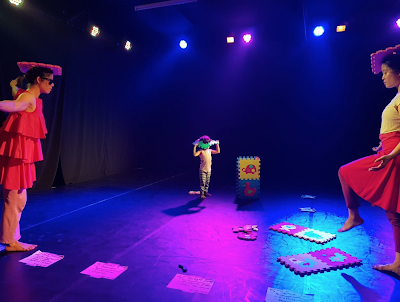
image by Kavitha Krishnan, courtesy of Rolypoly Family
CR: How did motherhood change your relationship to the artistic community here in Singapore?

Faye: My practice now includes working with children in a committed way. And also because of the attention I've put on advocating for artists with caregiving responsibilities [through Parenting Artists SG], I have started to work with artists I didn't used to have interactions with. Some of them have become very important and supportive peers for me, and I hope me for them also. 


I think some folks think of me as only working with children. I'm happy about that work, but I also have mixed feelings about that. I don't think this is the case across artistic communities and families - but there is definitely that association of “oh yeah, she is the artist who works with children and cares about caregiving.” (laughter) At the same time it's also quite thrilling to be able to bring these aspects into the fold of our dialogues as artists, and to be available to other parties who care about this model. Within this community, there’s this artist – they and I have been practicing contact improvisation together, and organizing events here in Singapore with other folks as well. But it was great when they also became a parent, and I was dancing with them when they were pregnant. Just to be in that space of overlap – of our movement practice, our changing bodies, our changing identities and of having this other being tag along and be around us. I was one of the first among my friends who was practicing and became a parent. Here in Singapore, I didn't have many parenting dance artists as predecessors when I had just given birth. There are a few dance artists I work with closely, who have either just given birth or are about to. I feel like a community of support is more possible now.

CR: Being a parent in the performing arts poses specific challenges:  there are so many components that you have to physically show up for – rehearsals and performances coordinated with many other people. Building that community seems crucial. Could you talk a bit about the group you recently launched, Parenting Artists SG?


Faye: Yeah, so we had some informal meetups in 2020. I wasn't actually all that keen on starting another Facebook group – but out of the first meeting we had, just at the start of the pandemic in Singapore, there were suggestions from the group to start something online, where people could gather. It was February 24 2020, just as Covid-19 cases were increasing here, and I specifically remember, we were on the edge of our seats - like “Can we do this? How can we meet up safely? Do we do this online?” We did temperature checking and signing in (for contact tracing), and it was hybrid, so the three or four artists who didn't feel well, they had their own discussion group online, and the rest of us met in person. The people who came were not only from the performing arts, but you are right to say there are challenges unique to performing artists.
CR: How did that initial event come about? What was the impetus to get it started?

Faye:
Well, when my son was quite young I gathered a very small group of artists who wanted to discuss parenting, inspired by an event at Movement Research in NYC. Four of us met to chat about what our experiences had been like, as working artists and as arts audiences (3 parents, 1 artist who was not a parent yet and became one a few years later). Two years later another small group got together, including two producers. In the meantime,  I was looking around online, researching how other artists were talking about being parents. Cultural Reproducers is a resource I went to a lot, and a couple of others, like Mothers Who Make. One of my producer friends posted something about a residency that was specifically supporting parenting artists and mentioned it seemed like a positive direction. And then another friend who is not a parent – who was advocating for more visibility and more support - posted that she wanted to do more. So I approached the both of them - it was me and these two friends who are not parents, but who care about this.

That set the tone for how things came together. There are folks who are active in the group who are not parents, and I really appreciate their attention, their care, their time in organizing some of this together in sharing resources. One of them combed through the internet to locate all the relevant government and arts policies, and created a resource document. A lot of these things I wouldn't have been able to cobble together if not for these folks. One of them is a producer who is an organizer with a group of arts producers here called Producers SG.  It’s quite deliberate that there's that partnership with Producers SG, because there's the push for artists to work in teams - we want to not handle everything on our own, and a lot of the times the producers are the folks who are helping to gather the resources. They gather the funds for the work, and they are the ones who then help to put the provisions that are needed – like childcare- into the budget sheets, into the application forms, into the negotiations with funders and such.


CR: I don't know if it's a performing arts thing or if it's a Singapore thing, but could you just briefly explain what you mean by a producer here? It is not something that I had heard about for smaller groups of artists in the United States, but it seems quite common here.

Faye:
Oh, my goodness yeah. It’s funny because you’re called Cultural ReProducers, and like, how are we using those terms differently? So first a disclaimer: I think different producers work in different ways for different projects. The producer typically helps make the project happen - the person who pulls the creative team together - whatever technical or administrative needs, and they may put in the infrastructure for the timeline, the fundraising, keeping the project on track in terms of division of labor and such. So they help make it happen, and take that load off the artists. Just this past year, during the worst of the pandemic here, I got to work on my first project fully produced by an independent producer.

Having producers that understand what it's like is very helpful. One of the producers went off to a festival in Europe where they were talking a lot about the visibility of work by women artists. He came back with an understanding of what to look out for to produce in a way that's more inclusive. So I feel like these things are happening in parallel.
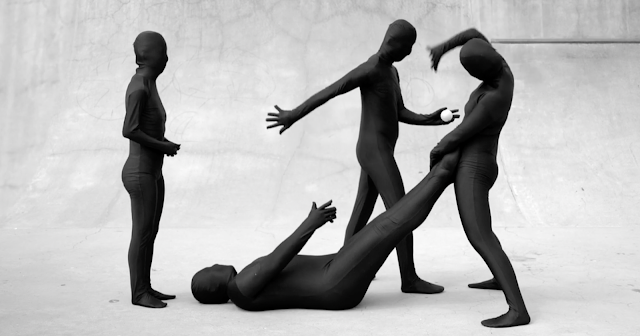
a still from the film "Beautiful Fields Beyond Me," (currently in development). image by Faye Lim
CR: What do you feel are specific challenges to being a parent in the creative community in Singapore -- things you’d like to work to change?

Faye: 
Culturally, there are quite specific expectations of how children should behave, and that puts these expectations on the parent as well. And art spaces, as you know… as progressive as we imagine them, sometimes are not necessarily progressive. That whole “children should be seen and not heard” thing. The arts community here is many communities. It’s really diverse. I think there are some other communities within the arts that are comfortable sharing space with children, but I don’t think in the contemporary dance community, that we can assume a familiarity with sharing space with children. Either that, or children tend to be objectified or exoticised - they are interesting and valuable to some artists insofar as they further the artists’ vision and artistic goals.

As someone who parents a child and advocates for children’s rights, it is quite challenging being in some of these spaces - but that has been an opportunity of growth for me. Practising compassion and empathy for my colleagues, collaborators, partners and myself hasn’t always been easy but has certainly paid off. The frank discussions and negotiations make room for us to challenge assumptions and can be generative for the working relationship.

I think another thing is also the concept of caregiving – is it a community or a society responsibility, or is it on the individuals. he concept of caregiving, when confronted in the workplace, feels very much like an individual's responsibility. I have heard laments about how other colleagues/collaborators have to take on extra workload when a parent takes childcare leave. The idea here is - your child, your problem. Whereas in some arts communities I am fortunate to work in, caregiving is viewed as part and parcel of work life - whether it is the care of a child, an elderly family member, or a colleague who needs extended medical care. I much prefer the notion that caregiving is something we look at collectively, so as to invest in our collective health and future. 
My friend had started up this informal performance space called "Make It / Share It," and that was also the time when I was thinking about how to thrive as a parenting artist. I talked to her about it and she said that in Sweden, children are anywhere and everywhere - they are present in arts spaces. So she created this open stage performance platform and added guidelines like “children are welcome.” She didn't call it a “family” space. Her guidelines were along the lines of  “If you want to perform here, do expect that you might hear some sounds from children - don’t get grumpy about it.” I performed there, but I also brought my son to shows. I have friends who make movement-based improvisational performances, and it was great to have this space where my son could join in, and they were so able to incorporate his sounds and his movement and his story-making into their show. That's the kind of risk taking, the kind of disruption and improvisation that I’m interested in when I make art. It doesn't have to come from a child, but how often do we get another adult audience members disrupting our show, much less in Singapore? (laughter) That’s the energy that I am completely excited by - to have a space where my son could be himself and the artists could be themselves… it was really perfect.

CR: I’m curious what projects you’re thinking about these days, or longer term, once your child is older.

Faye:
I have different strands of creative energies and goals and visions, and they tend to overlap, intersect, and diverge. Alongside what I’m making as a dance artist, I've been looking for avenues where I can have more conversations and intersections between art and public health, specifically for children. I’ve been trying to lay down some foundation to work at that intersection, whether it's as an artist, as an organizer, as a consultant. And then, alongside that, always my movement practice in contact improvisation. That’s like a stream that just flows for me, on and on and on. I imagine that will continue, and I’ll have different points of discovery along the way with my movement practice, and I don't necessarily have a plan for that.

  
Faye Lim dancing in "Telescopic Dreams," image by Finbarr Fallon


Friday, January 8, 2021

Interview: Susie Wong

Susie Wong (photo credit: Tamares Goh)
Susie Wong’s current work contemplates memory, mass media, and the consumption of circulated images. Active as an artist and arts writer since the 1980s, she forged her own path in Singapore’s art scene. Her practice has been enhanced by curatorial projects and her work as an educator at LASALLE College of the Arts. She has contributed art criticism for the Straits Times as well as features for magazines including ID and d+a in architecture and design, among many others. Recent projects include a multimedia installation for Objectifs gallery, and a site-specific video projected on the windows of her HDB flat as part of the National Gallery of Singapore’s series, out of isolation: artists respond to covid-19.


Cultural ReProducers is pleased to share four conversations with parenting artists in Singapore, begun during a residency there where connecting with fellow artists often meant meeting online, because of the pandemic. This interview is part of a creative exchange between Cultural ReProducers and the artist-run gallery CommaSpace. 


Susie with Anmari, at her 1993 solo exhibition Portraits & 
Places, National Museum Art Gallery, Singapore

Cultural ReProducers: Did motherhood change your relationship with the art community in Singapore? If you could, what might you change to create a more supportive environment there?


Susie Wong: During that time, in the 90’s and early 2000s, even being an “artist” was quite a new phenomenon in Singapore, in terms of numbers. I experienced the art community as an inclusive place. I felt – as a single parent – like I belonged. Perhaps it was a less structured place, and I can make it effective for myself and my child by including her in most activities. In retrospect, the art community had been fluid and accepting.  By art community I include as well the institutions I worked with along the way – I brought her everywhere - meetings, events, workshops - and I have not encountered any exclusion. It could be on account that I work with more women than men who led the projects. 

As for the wider community of Singapore–being an artist, let alone a single parent/artist, does attract more prejudices, as one can expect—culturally, traditionally. Today perhaps, there is greater acceptance of artist as a profession, a career, than before. Being a single parent, particularly a woman, still attracts a stigma. There is a national idea of “family”– traditional mould– that is being heavily rooted, and endorsed politically, and therefore societally, as the conservative segment of our society holds to gendered stereotypes in a family. So if I were to promote changes for inclusivity, I will propose new “family” models, alongside other forms of diversity. Examples of discriminatory policies are the lack of subsidized care or support for single women/parent with “illegitimate” offspring, in public housing, and in childcare. There do seem to be some changes, at least, support from various NGOs.


CR: Could you tell us a little bit about your daughter? 


Susie:
Anmari is precocious, an independent spirit. She is now very involved in the arts, an arts manager

Susie and Anmari at Susie's 1997 exhibition Soul & Flesh
Valentine Willie Gallery, Kuala Lumpur, Malaysia

in the F&B industry, also a curator, writer. She has always been assisting me, recording or documenting my work.  She just shared with me a picture of us at the opening of an exhibition at The Substation in the 1990s. in it, she was holding a voice recorder, looking all serious, and recording our speeches.

Cultural ReProducers: How did parenthood shift your creative practice? Were there changes in the work itself?

Susie Wong:
Anmari was born in 1989. Prior to her birth, I was already searching for my artistic practice and voice; I had spent one or two years teaching art, and had participated in small group exhibitions. My daughter was born at a time when my marriage was breaking down. Around that time, I was in Indonesia, in a kind of artist space/studio/residence in which I had made paintings, drawings, and connected with other artists there. In 1990 I returned to Singapore with her.

My practice still continued to be paintings, and I had some solo exhibitions. Painting is a very solitary practice, a space of solitude; in terms of time and space, it was a manageable way of juggling baby/child minding and art. The most difficult part was obviously the income that I needed to cover my living expenses. Selling my work had not made me financially independent. I had to resort to writing, editing and teaching; I have been a freelancer since those days. 

I think motherhood has provoked a certain interest and questioning of my place as a woman / single parent in society; this can be seen in several exhibitions and works. Being isolated in terms of my freelancing work— not fully connected in the conventional sense — meant that my work tends to take on more domestic perspectives and family situations. The frequently flailing empowerment in a society that presumes women as equal resulted in a new awareness. This became an important source from which ideas flowed. From the 1990s and on, collective engagements were important for my artistic growth.

Being a single parent and being an artist both involve… a lot of constraints. But I think the separation of two - being a parent and being an artist - there’s not very clear demarcation in these roles for me. She is really a part of my work. And today what is really lovely is that we bounce a lot of ideas off each other. She is very interested in the arts, inevitably, right? It’s her destiny. [laughs] Throughout the 30 years that she’s been around, she’s been exposed to a lot of artistic practices. So it’s – what is the word for it? It’s synergistic.

video stills from dancing alone, 2020, Objectifs, Singapore


CR: What advice would you pass on to a new parent struggling to balance parenthood, paid work, and an artistic practice? 


Susie:
I think of life and art as quite seamless. I always thought of the child as precious, placed as foremost in my sights. Once that is so, the struggle to balance becomes less acute. As for paid work, such a necessity, I live simply, and do what I can. Looking back, those must have been difficult years (maybe even depressive years), but I learn to live literally day-to-day, perhaps hand-to-mouth. I have been a part-time or freelancer for decades, and I actually believed for the longest time that this is the future model of work. The wonderful thing is that all this extra work - writing, workshops, teaching, curating - revolves around art as well, so I rarely need to step outside the field. It is at the emotional level that the child has played an important role in my life. You learn utmost patience, in growing slowly, and savoring the world.


Wednesday, March 11, 2015

Making It: LowJam

On a chilly Saturday we drove out to a low, mostly windowless brick building and followed paper signs in kid-scrawl around to a narrow side door. Stepping inside, we found ourselves in a kitchen adjoining a stage area lit by Christmas lights. The space thrummed with the sonic energy of a live dance party.

The music was fantastic. This was no surprise: the musicians performing included supertalented composers and multi-instrumentalists LeRoy Bach, Mikel Avery,  Dan Bitney, Khari Lemuel, & Matthew Lux, known for their roles in bands like Wilco, EveryPeople Ensemble,Tortoise, Isotope 217 and others, and they were clearly having a great time playing together. The unusual thing about this show was that it started in the middle of the day, and in addition to familiar faces from the city's art and music scenes it was co-populated by a small mob of young children ranging in age from about 9 months to 9 years old. They bounced on parents' laps, rolled around on giant cardboard tubes of the type usually used for cement-pouring, and giddily ran back and forth to the kitchen area, where there were crockpots of homemade rice and beans, jugs of juice, and a big bowl of peanuts to keep everyone satisfied between sets.

This is LowJam, a series of impromptu underground dance parties for adults and kids organized by LeRoy Bach in collaboration with a bunch of amazing musicians, many of whom are parents themselves or have other close connections to parents / kids. Attending a Low Jam event is like discovering your favorite band playing a secret show in somebody's basement, with the added pleasure of sharing that magic with your own children.

After two sets and a short snack break, Mikel Avery equipped the kids in attendance with small instruments and schooled them into an impromptu marching band that kicked off the Open Jam part of the show, leading everyone back into the stage area. Children excitedly piled around the professional drum kit, piano, mics, and organ and started banging away. After letting them have at it for a few minutes, Bach stepped up and helped them structure their soundmaking into a loose composition, directing spaces for groups of kids to play solos on each instrument. As he laid down a solid beat on the drums, a surprisingly cohesive intergenerational performance began to come together, fronted by two young girls who alternated crooning and rapping, "I dunno / I dunno / because it's crazy like whoah." The adults in attendance grinned and shook their heads in wonder: it sounded great. The aesthetic strengths of the Open Jam were no doubt enhanced by the musical upbringings of many kids there, but the unpredictable impulses that children naturally bring to such a situation only added to the improvisational energy.

Letting the sound vibrate through me, I realized that I hadn't enjoyed a really good live show since I became a parent. What a shame, and what a crime never to have shared such an experience with my own daughter before. It should not be all that transgressive, but such an event requires letting go of some fundamental assumptions: that a good dance party should start after 10pm, that kids will only enjoy certain types of music, that all family events should be highly-sanitized, safeguarded and sanctioned, that art created by/for adults can't also be thoroughly enjoyable for children, and vice versa. Most 'family' programming is created for children with parents along for the ride. LowJam taps into the energy of everyone present to create a rich musical experience. Period.

The next LowJam is Saturday, March 28th. Band starts at 1:30pm and will play for 30 minutes. Open Jam led by Mikel Avery starts at 2pm. A donation of $5 per guest or what you can offer is requested. Email us at culturalreproducers (at) gmail.com for location and other information.

Tuesday, April 8, 2014

Interview: Andrew Simonet

Andrew Simonet is a choreographer, a writer, and an advocate for artists based in Philadelphia. In 2006 he founded Artists U, a grassroots, artist-run platform for changing the working conditions of artists. We at CR were introduced to his work through the Artists Raising Kids project he recently initiated through Artists U, but Andrew is perhaps best known for his work from 1993 to 2013 as a founding co-director and choreographer of the award-winning Headlong Dance Theater with collaborators Amy Smith and David Brick. His projects include CELL, a performance journey for one audience member at a time guided by your cell phone, and This Town is a Mystery, performances by four Philadelphia households in their homes, followed by a potluck dinner. With Headlong, Andrew also helped found Dance Theater Camp, annual festival of workshops and collaboration for professional artists that is entirely artist-run and free for all participants, and the Headlong Performance Institute, a school for experimental performance with full college credit. As someone whose own work is so grounded in helping fellow artists identify and achieve their goals, he's got plenty to say on the topic of raising kids while sustaining a creative practice.

CR: Briefly describe your kids: ages, names, general temperaments…

Andrew: Jesse Tiger, 8, collector of unusual facts, inventor of trading card games, devoted reader. Nico Wolf, 6, keeper of our family traditions, sword fighter, tree climber.

Andrew + the boys (photo: Pierce Backes)
CR: You’ve just put together the crowd-sourced Artists Raising Kids Compendium through Artists U… so of course I have to ask one of the questions from that project: What are three things about raising kids you’d go back and tell yourself?

Andrew: “Slow down at the beginning, Andrew!” I did too much following the birth of our first (including starting Artists U). Having two little ones beautifully and ruthlessly made me simplify.

Be adventurous. Having an intensely colicky infant made us careful early on, maybe too careful. We were a bit more adventurous with the second, but overall too cautious, I think.

It’s ridiculously interesting and beautiful.

CR: Your wife is involved in the performing arts too. How do you two negotiate the demands of family versus rehearsal and performance schedules, and how has that changed as your kids have gotten older? 

Andrew: That was hardest in the early years. We used a ton of childcare. At first, it was
babysitters, and we have been blessed to have some remarkable, beautiful people as babysitters, which really helped. They were a big part of raising our kids, and their love and spiritual depth really affected us all.

performing in Headlong's You Are So Beautiful
(photo: Cylla von Tiedemann)
There was a lot of trading off: one person gets home and the other can go work. My wife had started teaching at a college, so between us, we had a fair amount of flexibility (work that could be done at whatever time was available, time off, the ability to determine a large part of our schedules). And we would try to stagger the intensive production periods: I get busy opening a show and she steps more with the kids, then we switch. It takes a lot of
mercy and forgiveness and advocating for what you need. I leaned on things I learned from my collaboration:

- Constantly choose not to resent.
- If everyone feels they are doing more than their share, the work gets done.
- No project or opportunity is worth the well being of the people involved.
  
CR: Thinking as big or small as you like, what changes or alternative structures would make the performing arts more accessible to artists with families?

Andrew:
I’m gonna quote myself in the “Artists raising Kids Compendium” here:
For me, this is part of my broader advocacy around sustainability. Artists who raise kids challenge a lot of the unsustainable assumptions in our field about money, time, and how to live as an artist. Those assumptions are bad for all artists, not just the ones with kids. I don’t advocate for the special needs of artist parents over the needs of others. I advocate for artistic lives that are balanced, sustainable, and professional, and supporting artist parents is part of that.

I think we as artists need to keep pushing to change the working culture of our sector. It’s dysfunctional for everybody: it’s workaholic, under-resourced (with most of the resources going to administrators, not artists), under-planned, needlessly competitive. We use as our model the 23-year-old, single, childless, healthy, frenetic artist living in a cheap warehouse. We need to include the whole arc of our lives, and parenting is part of that.

On a smaller, practical level, I think every organization should have a decent budget line for childcare. It immediately changes the conversation to one of possibility: what could we do to make this event/residency/festival/touring gig parent- and kid-friendly? I’ve seen a lot of growth over the past two decades in art institutions including kids in their programming, so they understand that this important to their mission and their future. When organizations have a roster of childcare providers on call and a budget to pay them (often true in activist and religious organizations), all kinds of things become easier. 

CR:  How has parenthood impacted your own creative work … as a writer, as a choreographer, as an advocate for other artists?

Andrew: My mission got bigger. Or maybe: simpler. When I started off as a choreographer, I really wanted to put my work out in the world (or rather our work since I worked in collaboration). Very early in my career, that broadened to include my community of like-minded performing artists. But when I had a kid, it got much bigger: I want more strong art in the world. So I can make my own work, and push to be rigorous and reckless, but really that’s how many dances? 50 in a lifetime? 70? I can have a lot of impact by helping other artists to survive and thrive.
Artist U's 5-year reunion, 2011 (photo: Jeffrey Fehder)

So, I started Artists U when we had our first child. (Again, not a great balanced parent choice, but definitely one inspired by becoming a father and seeing the world differently.) I’ve really been digging in to this curious question: exactly why is it so hard for artists in America? Artists are so ridiculously skilled and hard-working, why are we so often exhausted, overwhelmed, and broke? And why do so many of us lose touch with our deeper mission and still end up in unsustainable lives? There are lots of practical tools and strategies I’ve picked up, but the big thoughts are clarity and community. When artists are clear about what they are doing and when they don’t do it alone, they can make it work.

Artistically, I made a so-so dance about kids early on: the dancers, both moms, had to do the piece with their kids in tow, and whatever happened (nursing breaks, diaper changes, temper tantrums) was part of the piece. But I also found my artistic interests simplifying and getting deeper. I started to make a lot of intimate, immersive pieces, focused more on the bodies of the viewers than the bodies of the performers. CELL was a performance journey for one audience member at a time guided by your cell phone, You move through the city encountering performers (and non-performers), and you end up inside a dance, dancing as part of an immersive quartet. That really worked for me. I wanted everyone to have the embodied experience that dancers have: you are part of connected group, moving as one, responding and inventing, singing with your body.
This Town is a Mystery (photo: Kevin Monko)
Eventually I got rid of the professional dancers completely. This Town is a Mystery brought audiences to four Philadelphia households (very different neighborhoods, economics, cultural backgrounds). The members of the households perform a piece right their in the home, a dance theater show built from the stories and bodies and music of their world. And then everybody shares a potluck dinner. That was my last project with Headlong Dance Theater, the company I helped found 20 years ago, and it was incredible and overwhelming. I couldn’t imagine going back into the studio after that, working with the trained and fit bodies of dancers to make a piece for the stage. My artistic world had gotten so much bigger and stranger and more dangerous. And kids were a big part of that project. Two of the households had children in them who performed. And the traditions and bonds and ruptures of families were huge forces in that project.