Showing posts with label artist-mother. Show all posts

Thursday, January 13, 2022

Interview: Faye Lim

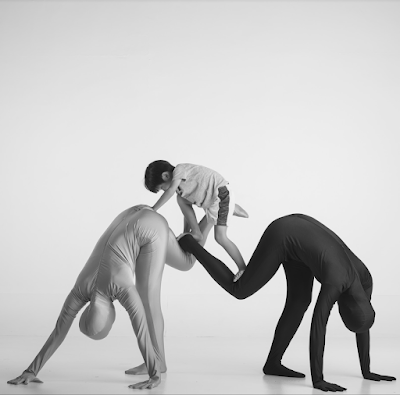
two dancers, one wearing a white full-body suit and the other a black one, supporting a small child with their feet
Faye's son supported by dancers in a work by Rolypoly Family,
image by Larry Toh Photography
Faye Lim is a dancer and movement-maker.  She is a mother, an educator, and an advocate for parenting artists. Her choreography and direction have been presented in public spaces, stages, and galleries in Singapore and internationally. As co-director of Derring-Do Dance, she makes body-based artworks and programs through Movement Arts and Rolypoly Family for diverse children and their families. Her training and experience span the fields of the arts, education, non-profit impact research and sexuality education consulting. At the start of the COVID-19 pandemic, Faye began working with a team of cultural producers to initiate  Parenting Artists SG, an online forum for discussing how the Singapore arts scene can be a more supportive environment for artists raising children.


This interview is part of a creative exchange between Cultural ReProducers and the artist-run gallery CommaSpace in Singapore.  It began during a residency where connecting with fellow artists meant meeting online because of the pandemic. Given these circumstances it felt especially lucky to meet Faye in person to connect over our mutual creative interests, and we followed up remotely once I returned to the United States.  (Christa Donner for Cultural ReProducers)                                                                                                                                        
Cultural ReProducers:
How old is your child now? How would you describe him?

Faye Lim: He is going on seven. It’s funny - recently my word for describing him has been “perfect.” I’d been thinking about it, and this word just kept coming up. Clearly not everything goes according to plan, but all the areas that he's growing in, learning in, figuring out, struggling - everything just feels like it makes perfect sense with who he is.

CR: What has changed in your creative process after becoming a parent, and what has stayed the same?

Faye:
I think what's been constant is my practice in movement improvisation, as well as studying and experiencing what freedom and the sense of liberation are like. I’ve always been quite topsy turvy in the way I choreograph and make dances, and having a child has enriched that approach and the sensation of disorienting and orienting again.

I experience dance differently now, after becoming a parent. Time and space and energy-wise, certain restrictions closing in on me. But moving around with him, improvising with him helped me to…play, I suppose, with that feeling of time and space closing in. I've been getting really a lot more curious and paying a lot more attention to how children and different caregivers move and work with their bodies. I mean, when I think about movement improvisation, dance improvisation - I also think about the autonomy and self-determination there and then. Like, how do children experience that? How do they experience their bodily autonomy around their caregiver - around adults, in different settings?
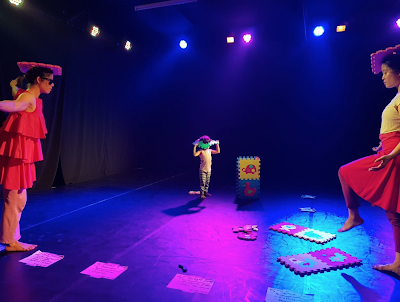
image by Kavitha Krishnan, courtesy of Rolypoly Family
CR: How did motherhood change your relationship to the artistic community here in Singapore?

Faye: My practice now includes working with children in a committed way. And also because of the attention I've put on advocating for artists with caregiving responsibilities [through Parenting Artists SG], I have started to work with artists I didn't used to have interactions with. Some of them have become very important and supportive peers for me, and I hope me for them also. 


I think some folks think of me as only working with children. I'm happy about that work, but I also have mixed feelings about that. I don't think this is the case across artistic communities and families - but there is definitely that association of “oh yeah, she is the artist who works with children and cares about caregiving.” (laughter) At the same time it's also quite thrilling to be able to bring these aspects into the fold of our dialogues as artists, and to be available to other parties who care about this model. Within this community, there’s this artist – they and I have been practicing contact improvisation together, and organizing events here in Singapore with other folks as well. But it was great when they also became a parent, and I was dancing with them when they were pregnant. Just to be in that space of overlap – of our movement practice, our changing bodies, our changing identities and of having this other being tag along and be around us. I was one of the first among my friends who was practicing and became a parent. Here in Singapore, I didn't have many parenting dance artists as predecessors when I had just given birth. There are a few dance artists I work with closely, who have either just given birth or are about to. I feel like a community of support is more possible now.

CR: Being a parent in the performing arts poses specific challenges:  there are so many components that you have to physically show up for – rehearsals and performances coordinated with many other people. Building that community seems crucial. Could you talk a bit about the group you recently launched, Parenting Artists SG?


Faye: Yeah, so we had some informal meetups in 2020. I wasn't actually all that keen on starting another Facebook group – but out of the first meeting we had, just at the start of the pandemic in Singapore, there were suggestions from the group to start something online, where people could gather. It was February 24 2020, just as Covid-19 cases were increasing here, and I specifically remember, we were on the edge of our seats - like “Can we do this? How can we meet up safely? Do we do this online?” We did temperature checking and signing in (for contact tracing), and it was hybrid, so the three or four artists who didn't feel well, they had their own discussion group online, and the rest of us met in person. The people who came were not only from the performing arts, but you are right to say there are challenges unique to performing artists.
CR: How did that initial event come about? What was the impetus to get it started?

Faye:
Well, when my son was quite young I gathered a very small group of artists who wanted to discuss parenting, inspired by an event at Movement Research in NYC. Four of us met to chat about what our experiences had been like, as working artists and as arts audiences (3 parents, 1 artist who was not a parent yet and became one a few years later). Two years later another small group got together, including two producers. In the meantime,  I was looking around online, researching how other artists were talking about being parents. Cultural Reproducers is a resource I went to a lot, and a couple of others, like Mothers Who Make. One of my producer friends posted something about a residency that was specifically supporting parenting artists and mentioned it seemed like a positive direction. And then another friend who is not a parent – who was advocating for more visibility and more support - posted that she wanted to do more. So I approached the both of them - it was me and these two friends who are not parents, but who care about this.

That set the tone for how things came together. There are folks who are active in the group who are not parents, and I really appreciate their attention, their care, their time in organizing some of this together in sharing resources. One of them combed through the internet to locate all the relevant government and arts policies, and created a resource document. A lot of these things I wouldn't have been able to cobble together if not for these folks. One of them is a producer who is an organizer with a group of arts producers here called Producers SG.  It’s quite deliberate that there's that partnership with Producers SG, because there's the push for artists to work in teams - we want to not handle everything on our own, and a lot of the times the producers are the folks who are helping to gather the resources. They gather the funds for the work, and they are the ones who then help to put the provisions that are needed – like childcare- into the budget sheets, into the application forms, into the negotiations with funders and such.


CR: I don't know if it's a performing arts thing or if it's a Singapore thing, but could you just briefly explain what you mean by a producer here? It is not something that I had heard about for smaller groups of artists in the United States, but it seems quite common here.

Faye:
Oh, my goodness yeah. It’s funny because you’re called Cultural ReProducers, and like, how are we using those terms differently? So first a disclaimer: I think different producers work in different ways for different projects. The producer typically helps make the project happen - the person who pulls the creative team together - whatever technical or administrative needs, and they may put in the infrastructure for the timeline, the fundraising, keeping the project on track in terms of division of labor and such. So they help make it happen, and take that load off the artists. Just this past year, during the worst of the pandemic here, I got to work on my first project fully produced by an independent producer.

Having producers that understand what it's like is very helpful. One of the producers went off to a festival in Europe where they were talking a lot about the visibility of work by women artists. He came back with an understanding of what to look out for to produce in a way that's more inclusive. So I feel like these things are happening in parallel.
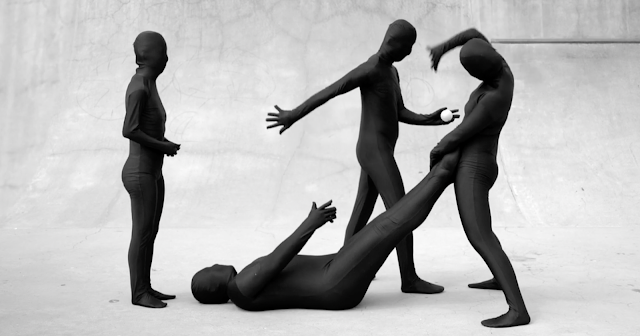
a still from the film "Beautiful Fields Beyond Me," (currently in development). image by Faye Lim
CR: What do you feel are specific challenges to being a parent in the creative community in Singapore -- things you’d like to work to change?

Faye: 
Culturally, there are quite specific expectations of how children should behave, and that puts these expectations on the parent as well. And art spaces, as you know… as progressive as we imagine them, sometimes are not necessarily progressive. That whole “children should be seen and not heard” thing. The arts community here is many communities. It’s really diverse. I think there are some other communities within the arts that are comfortable sharing space with children, but I don’t think in the contemporary dance community, that we can assume a familiarity with sharing space with children. Either that, or children tend to be objectified or exoticised - they are interesting and valuable to some artists insofar as they further the artists’ vision and artistic goals.

As someone who parents a child and advocates for children’s rights, it is quite challenging being in some of these spaces - but that has been an opportunity of growth for me. Practising compassion and empathy for my colleagues, collaborators, partners and myself hasn’t always been easy but has certainly paid off. The frank discussions and negotiations make room for us to challenge assumptions and can be generative for the working relationship.

I think another thing is also the concept of caregiving – is it a community or a society responsibility, or is it on the individuals. he concept of caregiving, when confronted in the workplace, feels very much like an individual's responsibility. I have heard laments about how other colleagues/collaborators have to take on extra workload when a parent takes childcare leave. The idea here is - your child, your problem. Whereas in some arts communities I am fortunate to work in, caregiving is viewed as part and parcel of work life - whether it is the care of a child, an elderly family member, or a colleague who needs extended medical care. I much prefer the notion that caregiving is something we look at collectively, so as to invest in our collective health and future. 
My friend had started up this informal performance space called "Make It / Share It," and that was also the time when I was thinking about how to thrive as a parenting artist. I talked to her about it and she said that in Sweden, children are anywhere and everywhere - they are present in arts spaces. So she created this open stage performance platform and added guidelines like “children are welcome.” She didn't call it a “family” space. Her guidelines were along the lines of  “If you want to perform here, do expect that you might hear some sounds from children - don’t get grumpy about it.” I performed there, but I also brought my son to shows. I have friends who make movement-based improvisational performances, and it was great to have this space where my son could join in, and they were so able to incorporate his sounds and his movement and his story-making into their show. That's the kind of risk taking, the kind of disruption and improvisation that I’m interested in when I make art. It doesn't have to come from a child, but how often do we get another adult audience members disrupting our show, much less in Singapore? (laughter) That’s the energy that I am completely excited by - to have a space where my son could be himself and the artists could be themselves… it was really perfect.

CR: I’m curious what projects you’re thinking about these days, or longer term, once your child is older.

Faye:
I have different strands of creative energies and goals and visions, and they tend to overlap, intersect, and diverge. Alongside what I’m making as a dance artist, I've been looking for avenues where I can have more conversations and intersections between art and public health, specifically for children. I’ve been trying to lay down some foundation to work at that intersection, whether it's as an artist, as an organizer, as a consultant. And then, alongside that, always my movement practice in contact improvisation. That’s like a stream that just flows for me, on and on and on. I imagine that will continue, and I’ll have different points of discovery along the way with my movement practice, and I don't necessarily have a plan for that.

  
Faye Lim dancing in "Telescopic Dreams," image by Finbarr Fallon


Friday, January 8, 2021

Interview: Susie Wong

Susie Wong (photo credit: Tamares Goh)
Susie Wong’s current work contemplates memory, mass media, and the consumption of circulated images. Active as an artist and arts writer since the 1980s, she forged her own path in Singapore’s art scene. Her practice has been enhanced by curatorial projects and her work as an educator at LASALLE College of the Arts. She has contributed art criticism for the Straits Times as well as features for magazines including ID and d+a in architecture and design, among many others. Recent projects include a multimedia installation for Objectifs gallery, and a site-specific video projected on the windows of her HDB flat as part of the National Gallery of Singapore’s series, out of isolation: artists respond to covid-19.


Cultural ReProducers is pleased to share four conversations with parenting artists in Singapore, begun during a residency there where connecting with fellow artists often meant meeting online, because of the pandemic. This interview is part of a creative exchange between Cultural ReProducers and the artist-run gallery CommaSpace. 


Susie with Anmari, at her 1993 solo exhibition Portraits & 
Places, National Museum Art Gallery, Singapore

Cultural ReProducers: Did motherhood change your relationship with the art community in Singapore? If you could, what might you change to create a more supportive environment there?


Susie Wong: During that time, in the 90’s and early 2000s, even being an “artist” was quite a new phenomenon in Singapore, in terms of numbers. I experienced the art community as an inclusive place. I felt – as a single parent – like I belonged. Perhaps it was a less structured place, and I can make it effective for myself and my child by including her in most activities. In retrospect, the art community had been fluid and accepting.  By art community I include as well the institutions I worked with along the way – I brought her everywhere - meetings, events, workshops - and I have not encountered any exclusion. It could be on account that I work with more women than men who led the projects. 

As for the wider community of Singapore–being an artist, let alone a single parent/artist, does attract more prejudices, as one can expect—culturally, traditionally. Today perhaps, there is greater acceptance of artist as a profession, a career, than before. Being a single parent, particularly a woman, still attracts a stigma. There is a national idea of “family”– traditional mould– that is being heavily rooted, and endorsed politically, and therefore societally, as the conservative segment of our society holds to gendered stereotypes in a family. So if I were to promote changes for inclusivity, I will propose new “family” models, alongside other forms of diversity. Examples of discriminatory policies are the lack of subsidized care or support for single women/parent with “illegitimate” offspring, in public housing, and in childcare. There do seem to be some changes, at least, support from various NGOs.


CR: Could you tell us a little bit about your daughter? 


Susie:
Anmari is precocious, an independent spirit. She is now very involved in the arts, an arts manager

Susie and Anmari at Susie's 1997 exhibition Soul & Flesh
Valentine Willie Gallery, Kuala Lumpur, Malaysia

in the F&B industry, also a curator, writer. She has always been assisting me, recording or documenting my work.  She just shared with me a picture of us at the opening of an exhibition at The Substation in the 1990s. in it, she was holding a voice recorder, looking all serious, and recording our speeches.

Cultural ReProducers: How did parenthood shift your creative practice? Were there changes in the work itself?

Susie Wong:
Anmari was born in 1989. Prior to her birth, I was already searching for my artistic practice and voice; I had spent one or two years teaching art, and had participated in small group exhibitions. My daughter was born at a time when my marriage was breaking down. Around that time, I was in Indonesia, in a kind of artist space/studio/residence in which I had made paintings, drawings, and connected with other artists there. In 1990 I returned to Singapore with her.

My practice still continued to be paintings, and I had some solo exhibitions. Painting is a very solitary practice, a space of solitude; in terms of time and space, it was a manageable way of juggling baby/child minding and art. The most difficult part was obviously the income that I needed to cover my living expenses. Selling my work had not made me financially independent. I had to resort to writing, editing and teaching; I have been a freelancer since those days. 

I think motherhood has provoked a certain interest and questioning of my place as a woman / single parent in society; this can be seen in several exhibitions and works. Being isolated in terms of my freelancing work— not fully connected in the conventional sense — meant that my work tends to take on more domestic perspectives and family situations. The frequently flailing empowerment in a society that presumes women as equal resulted in a new awareness. This became an important source from which ideas flowed. From the 1990s and on, collective engagements were important for my artistic growth.

Being a single parent and being an artist both involve… a lot of constraints. But I think the separation of two - being a parent and being an artist - there’s not very clear demarcation in these roles for me. She is really a part of my work. And today what is really lovely is that we bounce a lot of ideas off each other. She is very interested in the arts, inevitably, right? It’s her destiny. [laughs] Throughout the 30 years that she’s been around, she’s been exposed to a lot of artistic practices. So it’s – what is the word for it? It’s synergistic.

video stills from dancing alone, 2020, Objectifs, Singapore


CR: What advice would you pass on to a new parent struggling to balance parenthood, paid work, and an artistic practice? 


Susie:
I think of life and art as quite seamless. I always thought of the child as precious, placed as foremost in my sights. Once that is so, the struggle to balance becomes less acute. As for paid work, such a necessity, I live simply, and do what I can. Looking back, those must have been difficult years (maybe even depressive years), but I learn to live literally day-to-day, perhaps hand-to-mouth. I have been a part-time or freelancer for decades, and I actually believed for the longest time that this is the future model of work. The wonderful thing is that all this extra work - writing, workshops, teaching, curating - revolves around art as well, so I rarely need to step outside the field. It is at the emotional level that the child has played an important role in my life. You learn utmost patience, in growing slowly, and savoring the world.


Saturday, May 9, 2020

Inappropriate Bodies: Art, Design, and Maternity

Reviewed by Chrissy LaMaster

Rachel Epp Buller begins her introduction in "Inappropriate Bodies: Art, Design, and Maternity" by posing a question to readers: is maternity appropriate? The answer (I don’t think I’m giving anything away here) is both yes and no. “Maternity is both a cultural ideal and a cultural taboo, both appropriate and inappropriate” she writes as she goes on to explain how she and co-editor Charles Reeve went about deciding upon the overarching theme for their book. The result of their effort, 20 texts by practicing artists, designers, curators and academic scholars, is an amazing collection of both essays and conversations and an invaluable addition to the field of maternal studies.

Divided into the three sections of “Body Politics,” “Family Practices,” and “By Design,” one finds scholarly essays interspersed with personal testaments, conversations and interviews. Contributors seek to “examine maternity’s centrality as a defining term of female identity” for all women, regardless of whether or not they have chosen to have children. In addition to Epp Buller herself, featured are many artists, writers, and collectives familiar to the Cultural ReProducers community: Courtney Kessel, Lena Simic, Irene Perez, Jill Miller, Lise Haller Baggesen, Miriam Schaer, and many others. These contributions are significant, thought provoking, and at times inspiring. One piece that stood out to me was a a conversation between the curator, artist, and scholar Natalie Loveless  and "mamactavists" Martina Mullaney (Enemies of Good Art), Christa Donner (Cultural ReProducers), and collaborators Andrea Francke and Kim Dhillon (Invisible Spaces of Parenthood). Many things have changed since that initial conversation, which took place in 2016, from the “#MeToo" movement to the global pandemic that has thrown the complex expectations of working mothers into sharper focus. It is interesting to reflect on the shifts that have taken place and what they may (or may not) mean for mother's rights, mother's bodies, mother artists, maternal studies, and mothers in general. I also appreciate the exchange of letters between Rachel Epp-Buller, Lena Simic and Emily Underwood-Lee for many of the same reasons. "Discussions" like these are rare in most books on maternal art, but it is this collective approach that makes the book engaging to a range of readers, from those seeking scholarly documentation of maternal art practices to any creative person thinking through their own dual labor as artists and caregivers, and perhaps seeking solidarity.

Lise Haller Baggesen, Mothernism, 2013-ongoing. Audio
Installation. Copyright Lise Haller Baggesen
As a feminist and an artist who is interested in a more authentic representation of motherhood within both contemporary art and society in general, I found the book particularly relevant. Although several excellent texts concerning the maternal in contemporary art have been published in recent years, "Inappropriate Bodies" has quickly become my favorite. It is a wonderfully diverse combination of critical theory and personal perspectives. Intentional in its design, it is at once academic and approachable, which allows it to be accessible (and I feel more useful) to anyone interested in issues surrounding the maternal in art. 

*  *  *  *  *  *  *  *  *  *   *  *  *  *  *   *  *  *  * 
Doreen Balabanoff, Birthing Room conceptual model, bird's
eye view, 2016. courtesy of the artist
"Inappropriate Bodies: Art, Design, and Maternity" is published by Demeter Press,
an independent feminist press committed to publishing peer-reviewed scholarly work, fiction, poetry, and creative non-fiction on mothering, reproduction, sexuality and family.

Chrissy LaMaster is an artist currently living in Billings, Montana. Chrissy holds an MFA in Photography and Certificate in Women’s and Gender Studies from Illinois State University and an MA in Studio Art from Bradley University. Her primary areas of interest and research include the history of photography, gender studies, historical and contemporary representations of motherhood, and the history and theory of craft. Chrissy has experience in teaching, curating, and programming in a variety of arts related settings. Her work has been exhibited internationally, and can be found in both public and private collections.


Wednesday, October 23, 2019

Interview: Natsumi Sakamoto

Natsumi Sakamoto in her studio in Glasgow, UK
Natsumi Sakamoto is an artist exploring the relationships between memory, history, and mythology through a range of media including video installation, painting, and animation. Her work has been exhibited in London, Tokyo, Seoul and beyond - including shows at PlaceMAK, Tokyo Metropolitan Art Museum, and the 13th Gunma Biennale for Young Artists. Sakamoto is also a member of the feminism-focused artist collective Back and Forth Collective. 

This interview is the first in a brand new series from Cultural ReProducers Tokyo, thoughtfully conducted and translated by artist, art researcher, curator, and CR Tokyo organizer Catherine Harrington. These conversations explore some of the culturally-specific challenges of working as an artist-parent in Japan, and the fundamental questions we are all working to sort out together.


Catherine Harrington (CR Tokyo): To start, tell us a bit about you and your son. 

Natsumi Sakamoto: I’m an artist, mainly working with multi media. Focusing on untold histories such as individual’s and women’s histories, and everyday customs and beliefs, my aim is to examine the possibility of preserving the ephemeral, as a way to recover a loss. One of the documentary films I made in 2014 took me to places in Japan and the UK that were connected with my grandmother’s significant, personal memories.  I have been developing this project in my more recent work, and in 2019 I am going to start a new project in Scotland about Scottish superstitions and witch hunts.

My son’s now four years old and he’s very active and inquisitive - curious about everything.  Now, at his age, he asks why, why about everything. That was something I was really looking forward to. I wanted to answer those questions, even if they are sometimes silly questions, or really huge questions. For example he asks, “Why do you see the moon everyday?” and I try to be respectful to him as a person and I try to answer everything, even the little questions.  Sometimes I need to Google them.  He’s opened up a new world for me and made me more curious. Life has become richer than before, I would say. On the other hand, he’s stubborn.  He doesn’t easily change his opinions.

 
CH: What kind of identity shift did you experience when you first became an artist-parent?

NS:
I didn’t really have a clear shift because I was working all the time.  When I came back to Japan from the UK, I was pregnant and I really wanted a chance to network and show my work again in Japan. I kind of knew that it is going to be difficult to do an exhibition for maybe another year once our little one had arrived. So I thought I should plan something in advance, and decided to curate a group show just before the baby arrived. That was my first experience organizing an exhibition by myself – from getting the funding to finding a venue, and it took over a year and a half. The exhibition title was Everyday Fiction, and included work by artists from Japan and the UK dealing with two different worlds: reality and fiction, and the flexible boundaries between them.

I applied for several open calls and funding applications a few months after the baby was born - I was trying to keep on doing as much as I could in my spare time such as during the baby’s nap times. It was very tough! I probably did that purposely so as not to make a clear transition point between being an artist and being an artist-parent. It was thanks to support from my parents, my partner, my friends, and temporary childcare that I was able to do it. 

I tried not to change my everyday schedule and attitude to life.  You physically change and you psychologically feel that you have to be a good mother. It’s not like I became someone else, but more like I have a mother-identity and my artist-identity, and I shift between them, instead of trying to combine both. So, I don’t think about art when I spend time with my son; I become just a mother.  If I can switch easily between these two identities in a given moment, I can enjoy them. But sometimes it doesn't work and it becomes a bit of a mess. Exhibition time is very stressful because sometimes the switch doesn't work, and I’m always thinking about art while I’m talking to my son.

Natsumi Sakamoto, still from Rowan Wards off Witches, 2019


CH: With that in mind, do you feel that parenthood changed your art practice in some way?


NS: 
Before becoming a mother, my art practice was all about me and the environment around me. But after becoming a mother, I started to see the structure of society and the mother’s position in society. I guess I started to be interested in feminism more, and began to think about these questions through my art practice. I wouldn’t have been able to think this way without the experience of being physically incapable of certain things while being pregnant and while looking after a small child. You suddenly become so powerless in society. This was probably my first experience of becoming seriously aware of gender equality issues in real life.

In that first year I had this very concentrated time of being with my son twenty-four hours a day. I went to parks or the jidokan* with my son almost every day. It was a happy time, but when I saw other parents in those places, I started to become more aware of this unequal situation.

Note: *Jidokan(s) 児童館 and hiroba(s) 広場 are playgroups or play spaces where children and parents can play or socialize with other children and parents.  These spaces or groups can also involve organized singing or play activities.

At jidokan, I rarely saw fathers and mostly saw mothers, because the fathers were working on weekdays. Most of the mothers I met were unable to get a place for their child at a nursery. We talked with each other about how difficult it is to get a place in a nursery, how to make a successful application, and how hopeless our future careers would be if we couldn’t get a full-time nursery place for another few years. I actually met a mother who was thinking of a ‘temporary divorce’ from her partner so she could change her condition from ‘married’ to ‘single mother’ and strengthen her nursery application. The situation is so desperate. I hardly ever met fathers who had taken paternity leave, and whose partner had gone straight back to work after their child’s birth.

I was disappointed and angry about this situation. Japan has a declining birthrate, which is a big social problem, and the Japanese government encourages couples to have children as well as encouraging women to work more to help with economic growth. This is a contradiction: how can you encourage women to work without offering child care? There were many women who felt the same at this time and took part in protests. All this made me really aware of the issue of gender inequality. I felt I should do something – so I started to work with a few of my artist friends as part of a group we call the Back and Forth Collective.

CH:  Yes! The practice of the Back and Forth Collective is really important and valuable, and I hope you can continue to pursue this project.  When did you form the Back and Forth Collective?

NS:
We met at a workshop called Feminism for Everyone at Kosaten* in Tokyo around two years ago. I met Asako Taki and Mei Homma there. We all graduated from the same art university in London, but at different times. So we had known each other, but this was the first time we actually met altogether. We hit it off at that meeting, and started to talk about working as a collective.

Note: Kosaten* is an intersectional community space in Tokyo. Events such as discussions, conversations and workshops are held there with people from different backgrounds, and for instance; of different nationalities, ethnic identities, religions, sexualities, genders and (dis)abilities.


The core members are three artists at the moment, but we often collaborate with different artists and researchers. Each artist has a different area of interest but our common interest is feminism, so we started by working on this topic together. We’ve held workshops, exhibitions, and had a meeting with invited female artists. Last summer we had an exhibition at Tokyo Metropolitan Museum called Quiet Dialogue – Invisible Existences and Us.  Artists from Japan, Austria, Turkey and Indonesia showed work responding to the theme. The topics explored included Japanese women’s suffrage, the history of home economics, immigrants and minority ethnic groups, witch hunts, the issue of female labor and sex trafficking in East and South East Asia including Japanese girls serving as sex workers called Karayuki-san, and so on. To show the wide range of each artists’ research, we made a library in the exhibition space, which also functioned as an open space to talk.

If I didn’t have that intensive first year as a mother, I might not have joined.  I’m not sure how to put this, but I think that experience I had has given me stronger opinions about solving these problems.

 filming on the Isle of Bute, UK
CH: Did your experience with the art community shift when you became an artist-parent?  What kind of changes would you like to see in the art world?

NS:
Tokyo is quite big and there are many galleries and museums. It’s also an expensive place to live, so it is not easy for artists to have a studio in the city. I always feel that working in a local artists community has a good energy, with a lot of encouragement and exchange of ideas. But there are a lot of artists like me, working with digital media or small-scale work, who work from home. There are groups organizing events and meetings for artists and curators such as artist talks, screenings or discussions, and reading events. I met quite a few people through those events, and we often ended up doing projects together.

There is a certain difficulty to taking kids to art events. I’ve never tried. I would probably leave the room every time he gets fussy or cries. I just always think, “oh, I have to find somebody to look after my son.” My partner is very helpful and supportive with what I want to do, and always looks after my son so well. I need that help. But I feel bad every time I do this.

There are some changes recently: I’ve seen more and more baby-friendly event descriptions, including childcare services, on museum websites etc. This is a great improvement, but it is still not enough at all. If I go to events in the evening, everyone always asks me “What is your son doing?  Who is looking after your son?” I’m just thinking, if any fathers go to these events, probably not everybody is going to ask them this.  Probably they think that the mother is looking after their child.

Natsumi Sakamoto, still from unforgettable landscape (ROWAN TREE), 2014
CH: Have you had any role models for artist-parenting?


NS:
I don’t think so, no, because those stories are quite hidden, I don't know anybody personally.  Most of the successful female-artists I know are either single or they don't have a child.  Maybe the situation is different in the UK or other countries, so I hope I can meet some more artist-parents there.


CH: One issue that has been raised a lot in Japan – which is also a wider issue - is that of childcare. You had that first year when you were with your son for 24 hours a day.  After that, did you continue working alongside your son at home, or did you use childcare?  What was the next step?

NS:
The first year I didn't get childcare, so I had to wait another year.  From two years old, he went to nursery. He goes five days a week, so I could work on my art as well as working at my part-time job. I became more financially stable and I have a lot more freedom now than in the first two years.

In Japan you can only apply for the nursery if you have a job. It’s very competitive. So I was teaching two days a week. For those two days [before getting a nursery place], my mum helped out by looking after my son. That was such a big help. I put my condition down as freelance artist, editor, teacher and translator, working two days outside, and three days at home. I made a schedule with all the details such as who I work with, what kind of project it is, and where the funding comes from.

Basically I tried to combine all the types of ‘work’ I do – no matter if it’s paid or not – to fill up my working schedule. Other mothers were working full time, five days a week, and more than 40 hours a day. I needed to make my schedule equivalent to this, even though my work schedule isn’t a fixed one. The reality is that I often worked in the middle of the night and between nap times, so it was almost impossible to count how many hours I actually worked.


CH: So you found another way to apply for a nursery place ‘as an artist’?


NS:
Yeah, I was trying to find a solution. But I know it is not easy for everyone – another artist-mother friend gave up applying to nursery. She was making her artwork at home every day when she had time, and didn’t have a part-time job. She was a full-time mother-artist. The reality is that an application from someone working from home or as self-employed isn’t as strong as one made by a full-time company employee. So for her, there was almost no hope of getting a nursery place. From the government’s perspective, the occupation ‘artist’ isn’t as reliable as other occupations. I presume they don’t want to provide childcare for people who don’t make money, so it might be a bit different if an artist is only working on commissions. But the reality is that not a lot of artists actually make their living from only art!

Under these circumstances, being an artist-mother is very difficult in many ways, and it makes us feel guilty to work on our artwork. And when the baby is small, you have so much housework to do … there’s so much invisible labour that needs to be done. 

CH: This issue of what counts as labour and how different forms of labour are perceived is directly related to being an artist-parent in the art world.  And with all this invisible labour to deal with - how did you find time for your practice? What was your strategy in those first two years?


NS:
Before getting nursery care five days a week, I just had no time.  But I had this group show, so I had to make time.  So I got up super early in the morning every day.  Morning was the best time for me, before the baby woke up. If anyone else wakes up then a mess appears, or some other work - it becomes difficult to keep working or doing.  So I decided to wake up really early in morning, sometimes 4am, in the dark, and I just had to make a deadline for every little thing.  For example, “this writing has to be done in the next hour”, or something like that.  I made a super tight schedule.  And then when the baby cries I have to go and pick him up.  I’m like an athlete… running.

Natsumi Sakamoto, The Interview with a Witch, 2019.  Installation view at Tokyo Metropolitan Art Museum

CH: So how did you deal with sleep deprivation?


NS:
Yeah, I can’t remember.  I think I went to sleep early with my child.  I often used social networks, just to show or prove that I’d done something. At the time I felt I was invisible in society.  I couldn't go to see my friends because I had to be in the house.  I wanted to connect to somebody.  As an everyday routine, I would make one small drawing and post it to Instagram – like a diary – it works, you see the progress every day.  You make a little bit day by day.

CH: I recently read about a parent and child- friendly studio residency at the Washington Project for the Arts in the US, where the children can stay in the studio while the parents work.  Would this kind of initiative be helpful here?  If this kind of studio programme existed near you, would you want to be part of it?


NS:
A studio, with childcare? It sounds interesting. But I do wonder whether they have a strong barrier between the kids’ area and the parents’ area. I can imagine my son often coming to interrupt me... so, personally, I’m not confident that I could concentrate on my work when my kid is with me. It is a contradiction, because I totally agree with this idea of making your workplace more accessible to kids, but then, I know how difficult the reality would be.

Not only workplaces, but public spaces like museums or theaters still have a strong separation between kids and adults, and the unspoken rule is that kids shouldn't disturb the adult’s world. Having a separation is definitely the most productive and less stressful way for adults. For example, I am always nervous when I take my son to the museum. He loves to make noise in a quiet space, so the other people’s evil eyes towards me make me really sad and upset. I can totally understand what they feel, so my feeling is complicated. I feel angry and I also feel bad to have disturbed the other people at the same time. This situation is probably more particular to Japan than the UK.

I think it’s definitely worth trying these kinds of new ideas – otherwise the situation is never going to change.

Note: At the time of this interview Natsumi Sakamoto was based in Tokyo, Japan.  She is now based in Glasgow, Scotland.