Showing posts with label collaboration. Show all posts

Thursday, January 13, 2022

Interview: Faye Lim

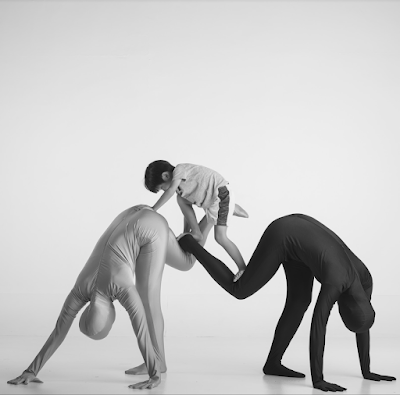
two dancers, one wearing a white full-body suit and the other a black one, supporting a small child with their feet
Faye's son supported by dancers in a work by Rolypoly Family,
image by Larry Toh Photography
Faye Lim is a dancer and movement-maker.  She is a mother, an educator, and an advocate for parenting artists. Her choreography and direction have been presented in public spaces, stages, and galleries in Singapore and internationally. As co-director of Derring-Do Dance, she makes body-based artworks and programs through Movement Arts and Rolypoly Family for diverse children and their families. Her training and experience span the fields of the arts, education, non-profit impact research and sexuality education consulting. At the start of the COVID-19 pandemic, Faye began working with a team of cultural producers to initiate  Parenting Artists SG, an online forum for discussing how the Singapore arts scene can be a more supportive environment for artists raising children.


This interview is part of a creative exchange between Cultural ReProducers and the artist-run gallery CommaSpace in Singapore.  It began during a residency where connecting with fellow artists meant meeting online because of the pandemic. Given these circumstances it felt especially lucky to meet Faye in person to connect over our mutual creative interests, and we followed up remotely once I returned to the United States.  (Christa Donner for Cultural ReProducers)                                                                                                                                        
Cultural ReProducers:
How old is your child now? How would you describe him?

Faye Lim: He is going on seven. It’s funny - recently my word for describing him has been “perfect.” I’d been thinking about it, and this word just kept coming up. Clearly not everything goes according to plan, but all the areas that he's growing in, learning in, figuring out, struggling - everything just feels like it makes perfect sense with who he is.

CR: What has changed in your creative process after becoming a parent, and what has stayed the same?

Faye:
I think what's been constant is my practice in movement improvisation, as well as studying and experiencing what freedom and the sense of liberation are like. I’ve always been quite topsy turvy in the way I choreograph and make dances, and having a child has enriched that approach and the sensation of disorienting and orienting again.

I experience dance differently now, after becoming a parent. Time and space and energy-wise, certain restrictions closing in on me. But moving around with him, improvising with him helped me to…play, I suppose, with that feeling of time and space closing in. I've been getting really a lot more curious and paying a lot more attention to how children and different caregivers move and work with their bodies. I mean, when I think about movement improvisation, dance improvisation - I also think about the autonomy and self-determination there and then. Like, how do children experience that? How do they experience their bodily autonomy around their caregiver - around adults, in different settings?
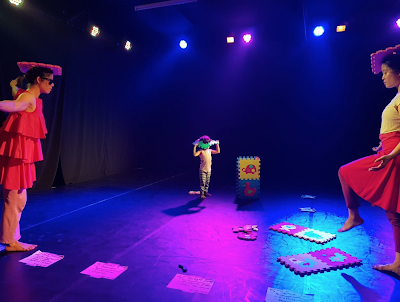
image by Kavitha Krishnan, courtesy of Rolypoly Family
CR: How did motherhood change your relationship to the artistic community here in Singapore?

Faye: My practice now includes working with children in a committed way. And also because of the attention I've put on advocating for artists with caregiving responsibilities [through Parenting Artists SG], I have started to work with artists I didn't used to have interactions with. Some of them have become very important and supportive peers for me, and I hope me for them also. 


I think some folks think of me as only working with children. I'm happy about that work, but I also have mixed feelings about that. I don't think this is the case across artistic communities and families - but there is definitely that association of “oh yeah, she is the artist who works with children and cares about caregiving.” (laughter) At the same time it's also quite thrilling to be able to bring these aspects into the fold of our dialogues as artists, and to be available to other parties who care about this model. Within this community, there’s this artist – they and I have been practicing contact improvisation together, and organizing events here in Singapore with other folks as well. But it was great when they also became a parent, and I was dancing with them when they were pregnant. Just to be in that space of overlap – of our movement practice, our changing bodies, our changing identities and of having this other being tag along and be around us. I was one of the first among my friends who was practicing and became a parent. Here in Singapore, I didn't have many parenting dance artists as predecessors when I had just given birth. There are a few dance artists I work with closely, who have either just given birth or are about to. I feel like a community of support is more possible now.

CR: Being a parent in the performing arts poses specific challenges:  there are so many components that you have to physically show up for – rehearsals and performances coordinated with many other people. Building that community seems crucial. Could you talk a bit about the group you recently launched, Parenting Artists SG?


Faye: Yeah, so we had some informal meetups in 2020. I wasn't actually all that keen on starting another Facebook group – but out of the first meeting we had, just at the start of the pandemic in Singapore, there were suggestions from the group to start something online, where people could gather. It was February 24 2020, just as Covid-19 cases were increasing here, and I specifically remember, we were on the edge of our seats - like “Can we do this? How can we meet up safely? Do we do this online?” We did temperature checking and signing in (for contact tracing), and it was hybrid, so the three or four artists who didn't feel well, they had their own discussion group online, and the rest of us met in person. The people who came were not only from the performing arts, but you are right to say there are challenges unique to performing artists.
CR: How did that initial event come about? What was the impetus to get it started?

Faye:
Well, when my son was quite young I gathered a very small group of artists who wanted to discuss parenting, inspired by an event at Movement Research in NYC. Four of us met to chat about what our experiences had been like, as working artists and as arts audiences (3 parents, 1 artist who was not a parent yet and became one a few years later). Two years later another small group got together, including two producers. In the meantime,  I was looking around online, researching how other artists were talking about being parents. Cultural Reproducers is a resource I went to a lot, and a couple of others, like Mothers Who Make. One of my producer friends posted something about a residency that was specifically supporting parenting artists and mentioned it seemed like a positive direction. And then another friend who is not a parent – who was advocating for more visibility and more support - posted that she wanted to do more. So I approached the both of them - it was me and these two friends who are not parents, but who care about this.

That set the tone for how things came together. There are folks who are active in the group who are not parents, and I really appreciate their attention, their care, their time in organizing some of this together in sharing resources. One of them combed through the internet to locate all the relevant government and arts policies, and created a resource document. A lot of these things I wouldn't have been able to cobble together if not for these folks. One of them is a producer who is an organizer with a group of arts producers here called Producers SG.  It’s quite deliberate that there's that partnership with Producers SG, because there's the push for artists to work in teams - we want to not handle everything on our own, and a lot of the times the producers are the folks who are helping to gather the resources. They gather the funds for the work, and they are the ones who then help to put the provisions that are needed – like childcare- into the budget sheets, into the application forms, into the negotiations with funders and such.


CR: I don't know if it's a performing arts thing or if it's a Singapore thing, but could you just briefly explain what you mean by a producer here? It is not something that I had heard about for smaller groups of artists in the United States, but it seems quite common here.

Faye:
Oh, my goodness yeah. It’s funny because you’re called Cultural ReProducers, and like, how are we using those terms differently? So first a disclaimer: I think different producers work in different ways for different projects. The producer typically helps make the project happen - the person who pulls the creative team together - whatever technical or administrative needs, and they may put in the infrastructure for the timeline, the fundraising, keeping the project on track in terms of division of labor and such. So they help make it happen, and take that load off the artists. Just this past year, during the worst of the pandemic here, I got to work on my first project fully produced by an independent producer.

Having producers that understand what it's like is very helpful. One of the producers went off to a festival in Europe where they were talking a lot about the visibility of work by women artists. He came back with an understanding of what to look out for to produce in a way that's more inclusive. So I feel like these things are happening in parallel.
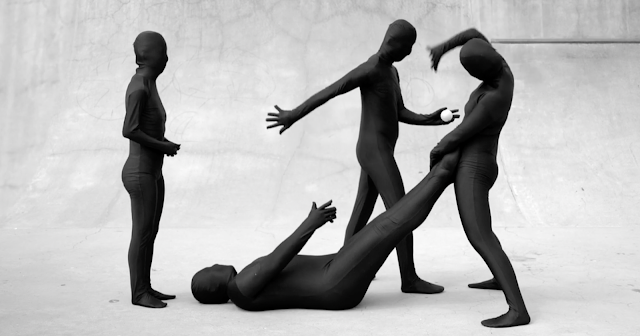
a still from the film "Beautiful Fields Beyond Me," (currently in development). image by Faye Lim
CR: What do you feel are specific challenges to being a parent in the creative community in Singapore -- things you’d like to work to change?

Faye: 
Culturally, there are quite specific expectations of how children should behave, and that puts these expectations on the parent as well. And art spaces, as you know… as progressive as we imagine them, sometimes are not necessarily progressive. That whole “children should be seen and not heard” thing. The arts community here is many communities. It’s really diverse. I think there are some other communities within the arts that are comfortable sharing space with children, but I don’t think in the contemporary dance community, that we can assume a familiarity with sharing space with children. Either that, or children tend to be objectified or exoticised - they are interesting and valuable to some artists insofar as they further the artists’ vision and artistic goals.

As someone who parents a child and advocates for children’s rights, it is quite challenging being in some of these spaces - but that has been an opportunity of growth for me. Practising compassion and empathy for my colleagues, collaborators, partners and myself hasn’t always been easy but has certainly paid off. The frank discussions and negotiations make room for us to challenge assumptions and can be generative for the working relationship.

I think another thing is also the concept of caregiving – is it a community or a society responsibility, or is it on the individuals. he concept of caregiving, when confronted in the workplace, feels very much like an individual's responsibility. I have heard laments about how other colleagues/collaborators have to take on extra workload when a parent takes childcare leave. The idea here is - your child, your problem. Whereas in some arts communities I am fortunate to work in, caregiving is viewed as part and parcel of work life - whether it is the care of a child, an elderly family member, or a colleague who needs extended medical care. I much prefer the notion that caregiving is something we look at collectively, so as to invest in our collective health and future. 
My friend had started up this informal performance space called "Make It / Share It," and that was also the time when I was thinking about how to thrive as a parenting artist. I talked to her about it and she said that in Sweden, children are anywhere and everywhere - they are present in arts spaces. So she created this open stage performance platform and added guidelines like “children are welcome.” She didn't call it a “family” space. Her guidelines were along the lines of  “If you want to perform here, do expect that you might hear some sounds from children - don’t get grumpy about it.” I performed there, but I also brought my son to shows. I have friends who make movement-based improvisational performances, and it was great to have this space where my son could join in, and they were so able to incorporate his sounds and his movement and his story-making into their show. That's the kind of risk taking, the kind of disruption and improvisation that I’m interested in when I make art. It doesn't have to come from a child, but how often do we get another adult audience members disrupting our show, much less in Singapore? (laughter) That’s the energy that I am completely excited by - to have a space where my son could be himself and the artists could be themselves… it was really perfect.

CR: I’m curious what projects you’re thinking about these days, or longer term, once your child is older.

Faye:
I have different strands of creative energies and goals and visions, and they tend to overlap, intersect, and diverge. Alongside what I’m making as a dance artist, I've been looking for avenues where I can have more conversations and intersections between art and public health, specifically for children. I’ve been trying to lay down some foundation to work at that intersection, whether it's as an artist, as an organizer, as a consultant. And then, alongside that, always my movement practice in contact improvisation. That’s like a stream that just flows for me, on and on and on. I imagine that will continue, and I’ll have different points of discovery along the way with my movement practice, and I don't necessarily have a plan for that.

  
Faye Lim dancing in "Telescopic Dreams," image by Finbarr Fallon


Wednesday, January 20, 2021

Interview: Mintio and Kabul


Mintio (Samantha Tio) and Kabul (Budi Agung Kuswara) are internationally exhibited artists whose work has shifted profoundly since becoming parents. As the sexism and privilege of the art world presented new barriers, the two artists merged their separate practices into multimedia collaborations, including “The Wax on Our Fingers” and “The Current/s We Call Home.” They also founded Ketemu Project, a socially-engaged arts organization in Bali that allows them to operate beyond the commercial art world. Ketemu uses art to engage marginalized groups in the community, address environmental concerns, and support the work of fellow artists through a new family-in-residence program. When we spoke, the two parents were separated by the pandemic, with borders closed: Mintio working from home in Singapore with their 8-year old daughter, Ning, and Kabul in Indonesia, where Ketemu is based.

Cultural ReProducers is pleased to share a series of conversations with artists parenting in Singapore. This interview is part of a creative exchange between Cultural ReProducers and the artist-run gallery CommaSpace. This partnership began in the midst of the Covid-19 pandemic, when connecting with artists meant juggling online conversations while caring for e-learning children at home. We’re so thankful for these conversations, which raise critical questions about support, culture, and creativity.
____________________________________________________________________________________

Cultural ReProducers: Mintio, you grew up in Singapore and Kabul in Bali, and you typically travel between the two when you’re not grounded by a pandemic. How has this shaped the culture of your family and your creative community?


Kabul: I’m not a typical Balinese: my mom is Javanese and my dad is Balinese. I grew up in this mixed culture environment, so when I was younger my family from my mother’s side, when I visited Java they brought me to a mosque to pray. And when I come here to Bali I would go to the Hindu temple to pray. Traditional Balinese they are really connected with daily cultural activities. When I went to JogJakarta for 13 years - to study, and I had my studio based there – I felt comfortable because I had 24 hours my time to manage on my own. So when I met Mintio in Jogja, I don’t see it as much different in terms of cultural background. But when I visited Singapore, I had … a challenge to fit.  Everything’s really efficient in Singapore, but my work as an artist is not a “profession” there.

Mintio & Kabul, image from "The Wax On Our
Fingers" series, cyanotype and wax on cotton.

Mintio: We are facing transnational issues in terms of Visas, and I think that’s the biggest thing that we’ve been working out the entire of our parenting and family life. Reflecting on my own cultural identity, I see myself very much of an outcome of migration. I’m born to an immigrant family of Southern Chinese and, you know, this is not my land. Whereas in Bali, Kabul has his ancestral hall, and all the lineages and histories attached to the land. I’m this kind of floating entity. Kabul really has that status as a third-culture child, by having mixed parentage. So I’m wondering what’s gonna be in it for [our daughter] Ning, as a third-culture kid.

In a sense, what we want to establish for our child is that you can be at home anywhere. You can be anything you define yourself to be. But of course that also involves a lot of scaffolding – it has to be very conscious and aware. So even as a very young child I talked to her about “What’s the difference between your cultural identity, your nationality? What does it mean? Who are you?” Because these questions get thrown to her a lot in school here: in Singapore you are believed to have this very singular identity: you’re either Malay, Indian, Chinese, or “Other.”
 
What grounds us culturally is art. We see art as that binding force in our family. That allows us to exist anywhere as a family – being nomadic, you know, we build our own kind of network as a family, creative community around the world. Kabul and I have a practice that, whatever we make, it has to fit into our luggage. Or it could be rolled or folded. That constraint gives a certain kind of liberty to where we can show – it has shaped the medium of our works. Ever since that we work a lot with tapestry, textiles, anything that can be folded. It could even be something that you could wear onto the flight, you know, like a really big jacket. The installation was about 100 meters square, but we fit everything into a self-bought bag that Kabul could take onto the flight.

Mintio and Kabul, installation view of "The Current/s We Call Home," mixed media with sound

CR: This cultural complexity informs your collaborative work. I know you work both separately and also together. Could you talk about that?

Mintio: We have our joint practice and we have our individual practices, and they are quite different. When we come together, we quite naturally turn to address the issues we are facing together. I think my own work is quite acultural because it’s quite technical. But Kabul… recently it’s become more cultural, but previously it focused more on socio-political issues.
 
Kabul: Yes, because my situation here also relates to… cultural consequences. Because my mother is Javanese and my father is Balinese from a certain caste, things happened to me as a child that didn’t allow me to carry that caste. So when I am younger, this gives me a different treatment. For example, I can’t share a cup with my family. In the beginning I see this treatment as something that really makes me sad. But after studying in university I moved to Jogjakarta, and I come to see this as a kind of freedom. I was able to see Bali more clearly, looking back. I start to learn about history, how Balinese culture formed. When I’m in Jogja I’m exploring social issues. Now that I’m back, I work closely with historical material and cultural practices that I tweak with my own understanding. For traditional Balinese they can’t do this, because it’s against their beliefs.

Mintio:
Together we run an art organization called Ketemu Project in Bali. Ketemu means “to meet,” so basically what we are doing is we are meeting each other. Katemu is this… other thing, so it’s everyday work that people can connect to in Indonesia.

In our residency program, we have a family-in-residence, where we create the infrastructure to support entire families. That came from our experience being in residence at Bamboo Curtain Studios in Taiwan. We were invited as a family, so that was wonderful. Other than everybody being very welcoming, there were things like high chairs, open spaces for her to run around. Being with a child wasn’t a taboo conversation. We would bring her to all our shows, all our workshops - she was always there. So it didn’t seem like our parenting lives were separate from us throughout the entire residency.

Budi Agung Kuswara (Kabul), "The
Grateful Society," cyanotype and ink
on cotton paper

We realized that ever since we became parents, we’d been cut off from many residency opportunities. Most residencies expect you to go alone for extended periods of time. You cannot bring a spouse – you definitely cannot bring a child. We find that framework really challenging for artists holding caregiving identities, and it defines artists in a really narrow way. So we were inspired and motivated to further support families through our own residency program, to support artists more holistically. 


CR: How did your practice change when you had a child?

Kabul: For me, what had to change is having to adjust to the idea of being a parent in Singapore. I never worked in an office, or worked for other people before. Luckily, my in-laws slowly accept me, but in the beginning, they asked me to find a job [there]. I tried to do that. I spent two years for experiment. I didn’t come up with artwork that was final or ready. Sometimes I can say this artwork is “done,” just to make myself happy – but I realized this is not maximal. This was a really important process as a step to develop my work now.

The biggest thing after having kids is, What art really can do, beyond the object? To achieve this we can’t work alone. Ketemu is the infrastructure to support this vision. And what art can do, especially in this pandemic situation… the challenge in Bali is that the largest industries are shut down and no tourists can come, so what can we do? When we talk about art and creativity, it’s becoming more and more relevant to social challenges. Ketemu can be a tool and it can also be a legacy. I adjust as someone who has to take care of other people outside of myself. I enjoy parenting very much. Since our daughter was born until she is 3, 4 years, I’m the one who gives her bath every day. Because that’s how, here in Bali, parents take care. It was really rare for my circle here to have helpers to take care of their kids. But I think it will be different for Mintio.

"Instead of having this tangible end product, we think about how we can actually shape society."


Mintio photographing batik artisans for "The Wax on Our Fingers"
Mintio:
I think parenthood really changed a lot. Prior to having our child, I was very much a career artist – I would do shows pretty regularly, I could draw regular income from my work. But that work was also very physically strenuous. The conditions of production, even on a logistical basis, are so different. I still have not managed to resolve it.

I photograph predominantly with the large format [camera], so I had all this really huge gear and I’d walk for hours, work alone for days at a time, with very little human interaction. Through my pregnancy I sustained a bad back injury that I’m still dealing with now, and I had to hire an assistant to carry my gear for me. It became very clear that this mode of production might not be able to sustain itself. The cost of hiring an assistant long term, and of production itself, was so high that I started to have that mindset of comparing the sheets of film that I will use to diaper money or milk powder money. And that held back... I didn’t have that same degree of experimentation that I had while being single. It became a mental block.

So what was continuing to drive my work was collaborations with Kabul. There were times when we would fight, and I would wish I could just go back to my own personal practice. But there’s also many wonderful, magical things that came out of it. We were able to travel together as a family, like the Bamboo Curtain residency. That was where the art community recognized our joint practice, and were able to give us opportunities based on that.

In Singapore I face a lot of discrimination for being an artist and a mother at the same time. When I was expecting, I applied for a scholarship to pursue my Masters. Having higher education beyond a Bachelors has always been my dream. I got good responses from the University, and got scholarships on the other end, but I needed scholarship here. The final round of interviewing came one, two weeks after I gave birth to her. I remember that day. It was pouring rain, I had to leave Kabul and Ning at home and went for my interview. The interview was scheduled to be around 3pm, and it ran late… it didn’t begin until 6pm, and I didn’t pump enough milk for her. When I got home, he was carrying her around and she was just crying. I was in tears, it was raining, it was really bad.

But what added to the whole negativity of my experience was that the whole interview became about my motherhood. When I came in, everybody clapped. And I was like “Why are you clapping?” And they said “You just gave birth, didn’t you?” And I was like “Yes…but what does that have to do with this interview?” (laughter) I was pretty anxious already, having left Kabul and Ning alone for so long. Lets get right to it. This male panelist said, “You just gave birth. What makes you think you can study?” Another male panelist was just sitting across from me doing this the whole time (leans on hand with a troubled expression, shaking her head). What they just couldn’t figure out was, how could you go do your Masters when you just had a child? It wasn’t information I gave in the application. I wasn’t being evaluated for my ability as an artist - more on the disability that I would face. I couldn’t believe that half the time of the interview I had to defend that.  In the end I didn’t get the scholarship. I’ve always been quite stimulated by the academic setting – it’s a place I want to be. But I don’t even think that I could go beyond a Bachelors now, with all the challenges.

CR: It’s a little shocking how many people still assume a woman will stop her career once she becomes a mother, even if you’re actively parenting together with a partner.

Mintio: I’m very fortunate that my earlier works have still been circulating, going around to shows, globally. But I have not managed to make anything new, besides our joint works. There’s always this pressure as an artist that you need to constantly make new work to validate yourself. But only now, in the case of the pandemic, do I tell myself “It’s okay not to make work! It’s okay to take a pause. It doesn’t mean you won’t make work in the future.” There’s the anxiety of being forgotten by your collectors, that the art world will think you’re not active anymore and hence exclude you from any opportunities.

Shortly after the interview, I was at a festival opening, the Singapore International Photography Festival. There was a curator there that I really respected. He introduced me to some other guy as “This is Mintio, but she’s not very active now because she just had a child.” I didn’t know what to say. All these microagressions, they ate into my self-esteem as an artist. When I was awarded a commission, I questioned myself. All my negotiations felt asymmetrical, and it became really unhealthy. It doesn’t seem to impact male artists in this way. They wouldn’t go up to a male artist and say “oh this is so and so, but he just had a kid, so of course he hasn’t been producing work.”

Kabul and team molding banana fibers with Mintio's photographic
prints into sail forms for "The Currents We Call Home."

CR: Are there any artists you’ve been able to look to, examples of how to make it work as artists and parents?

Mintio:
I did a lot of research, actually. I went to a lot of symposiums where mothers talked about what could be done. There was one artist who said “bring your child to work,” and there were all these tips being dropped. But the ability to do all of that comes with a lot of privilege. Our family is quite modest financially. We can’t afford a caregiver or a helper, which I’m actually very thankful for. All these mothers being able to incorporate their kids, to have it all, there’s all this privilege that you don’t see. Maybe they have a hedge fund, or they draw rental income (laughter). So as much as earlier on there were parenting artists I want to emulate, in the end my earlier models were like “pffft” [makes a gesture of something going up in smoke]. 


Kabul:
After we had Ning, we have been doing much more community-based work. We actually take care of many, many more people. So for me, it’s been about activating my instincts of taking care. Maybe it will mean adding additional staff that I will have to deal with, but when I look at it as a life, something that I just enjoy – our lives have this perspective by seeing what I can do, and I can learn from other artists in the same way. For me this is all natural. I don’t actually compare them. I really learn a lot, taking care of more people after we have kids.


Mintio: Instead of having this tangible end product, we think about how we can actually shape society in a certain way. It’s all about changing mindsets and perspectives. Our recent project has been about disability and mental health. It was not a physical work that we could sell -- the work was about how we could impact our own communities. I don’t know if you feel this way, but being a parent makes us aware of our own mortality. Like, what’s going to happen to Ning if I die? And it also makes us think about our legacies: What do I want to leave behind? For a lot of families in Singapore it would be like, I want to leave behind excess: a house, some money for my children… but for us it is quite clear that we don’t want to leave behind all that. So very clearly our work now is that we want to be able to leave behind a society that Ning could thrive in, where she can be herself and feel accepted. 


Tuesday, April 2, 2019

Interview: Angela James

Singer-songwriter Angela James moves fluidly and collaboratively between the genres of alt country, improvised music, and indie rock. The Chicago Reader called her 2016 album, Time Will Tell, “smoldering and gorgeous.”

When Angela found herself struggling with postpartum depression after the birth of her daughter, she turned to her music as an anchor.  Now she’s using it to celebrate and support artist-parents. Her forthcoming album, Quiet Night, is a collection of lullabies that evolved through the difficult days of early motherhood. As the songs became an album, Angela made a commitment to work exclusively with fellow parents on the project, from the instrumentalists and the sound producer to the publicist and the album artwork. 

Quiet Night debuts April 12th with a 3pm all-ages show on April 20th at the Hideout, the Chicago institution where the project got its start. If you’re in Chicago, bring your family! Cultural ReProducers sat down with Angela over hot mugs of tea to find out more about this labor of love.


Cultural ReProducers: Finding time for creative work as a new parent can be… complicated. How did you return to music after becoming a mother?

Angela James: After Hattie was born I did this month-long residency at the Hideout. I’d scheduled the residency before I had her, because I was like, “if I’m not back making music and performing when she’s nine months old, then I’m not relevant anymore.” (laughter) I put a tremendous amount of pressure on myself to reconnect.

The residency basically meant that I had to perform every Tuesday for a month, put together a bill every week. It’s an opportunity to do new material, which would be one thing if I just decided to play one show, but I was like “I’m gonna play a show every week!” These are the ideas you have when you don’t have a child yet. The first show of that residency was called Women of the World Take Over, with 18 different female performers each covering a different Chicago female performer. I got sick in the middle of it and lost my voice, and there were all kinds of things that happened. It was so much work. It was wonderful.

I had these melodies that I wrote while spending all these hours trying to get her to sleep. I was gonna go crazy otherwise. After the residency, I started making them into songs. I have no illusions that these melodies actually helped her sleep (laughter) - they were lullabies for me.

CR: That’s something I feel like people don’t talk about enough: that lullabies can be just as important to the parent as it is to the child being sung to. Singing creates this breathing and resonance that is so grounding for someone who’s exhausted and dealing with a baby that won’t go to sleep.
 

Angela: It’s also part of this whole arc of things. It’s what I’m going to play during a bedtime routine
at the end of the day, and the days are long. That’s also why I decided it would all be mid- to low-tone instruments, no percussion. The vibraphone and the bassoon, those are the instruments that just make me kind of … sit a little deeper. I can remember when I was first exposed to Peter and the Wolf as a child – the idea that instruments have their own personalities. It was huge for me. I’m a singer, but it gave me this internal sense that these things have voices just like I have a voice. The vibraphone just makes me feel… safe. There’s something about that bell-like chiming sound that is so soothing.

CR: You’ve made an intentional decision to work with fellow parents on every aspect of this album. How did that idea come about?

Angela: Well, I know some incredible musician parents in jazz or experimental new music. And then I was like, “Well, if I’m gonna have all the performers be parents, then …”

My friend Shelly usually does live sound, but she was a new mom and had just gotten a new job in broadcasting and asked me if I had a project that was fairly simple that she could record.  And I was like “Well yes, actually, I do.” And then I decided that whoever mixes it has to be a parent, and whoever does the artwork has to be a parent. And the mastering engineer. And now the publicist, she’s also a parent.

It’s been a great opportunity to observe and honor what people are able to accomplish while raising young children. Most of our kids are preschool-age. I feel like everybody’s just trying to hold on, to maintain some kind of creative practice. And at the same time - I know in my case - that creative work keeps getting better. There have been some interesting articles about this in the past few years, whether it’s time-management, or because your world view has gotten more expansive because your love is… exploding, but you also have to focus. There is something better about my work, now. And it’s cool to see that in everybody that’s involved in the project in different ways. These people’s careers are blossoming at the same time that they’re raising a newborn. That’s so inspiring to me.

CR:  You’re open about your struggle with postpartum depression. How did that experience intersect with your work and your identity as a creative professional?

Angela: “Quiet Night” came out of this really emotionally fraught time. I think it is for everybody! Even if you have a great breastfeeding experience, or your child sleeps through the night at two weeks old, which is … impossible (laughter) but some people do have really chill postpartum newborn situations. Even then, it’s still kind of crazy. As an artist I just put all this extra pressure on myself, which was another layer to my postpartum depression. I thought, “I’ll never make art again. This is just the way it’s always gonna be. This is the child I have made.” You can’t see anything else.

I feel like everybody’s just trying to hold on, to maintain some kind of creative practice. And at the same time that creative work keeps getting better.

I remember having a panic attack – [my partner] Jordan was curating at Elastic at the time, and he had to go to an art opening. We lived a couple of blocks away, but I was panicking at the thought of being home alone with Hattie. She was two weeks old at the time. I thought that was just the way people feel. It took another week of that to realize that I was suffering. We don’t realize it’s a problem because there’s not a visible support structure for that. I went in for a checkup and my doctor said, “I don’t want to offend you, but you’re not okay.” And I was like, “No offense taken. You are correct.” She connected me with a therapist who specializes in postpartum depression, so I was able to address it with talk therapy and medication. Those feelings were a huge part of this project. The more I listen to the songs on this album, the more I think that maybe they’re really for me. That they will be soothing for parents that are going through this difficult and all-consuming time.

CR: I love that idea of using music as a way of caring for people who are going through something you went through.

Angela: I didn’t set out to do that, I guess few people actually do – but the lyrics of one of the songs is like, “I don’t know what you need, I don’t know what to do, I don’t see what you see, I can’t go everywhere with you… but I love you. The most.” I think the desperation is evident in that song

CR: It’s interesting because I don’t find that edge in most of the songs. Even knowing what you went through in the process of making it, the music itself is incredibly soothing.
 

Angela: Right, well there’s one other song that’s like, “we’re both really tired. Just, please go to sleep.” But everything else is just about love. That’s the real thesis statement. I didn’t write the lyrics when there was that edge. She was finally sleeping and I was finally starting to come out of it. I hear these mythological tales of artists who can create while they’re in a horrible spot in life… I had a very difficult decade in my 20s with lots of experience that could be material to write about, but there’s no way I could have written music and lyrics when I felt that way.

CR: How would you say this is album is a departure from your previous work?

Angela: Well, it’s all me. This is the first project that I’ve done musically without Jordan. That’s a new layer that I’m still processing now, the fact that Jordan doesn’t play on it. A lot of it is logistical: he has to be home with her while I’m doing these recordings. We’re not gonna pay for a babysitter. He wrote one song, but he’s not involved in the recording. I got a DCASE Grant to manufacture it, and I just received word yesterday that I got an Illinois Arts Council Grant to pay for the PR.

CR: Congratulations!

Angela: Thank you. I’m super excited about the publicist I’m working with. She specifically does kids music. I’ve never worked with a publicist before. Usually the people who need publicists the most don’t have them, because the good ones are very expensive. If I hadn’t gotten this grant, I don’t know if I could do this. I am committed to talking about postpartum depression in an open way, and this album is a vehicle for me to do that. It’s an experience that so many women have, but we’re not encouraged to talk about it. I think that’s important.


CR: Your daughter is two years old now. How has the reality of making music while parenting measured up to your expectations pre-motherhood?
 

Angela: All babies are different. Early on I had this idea that, you know, we’ll all go to shows… I’ll wear her, and she’ll wear those ear protector things. But that’s not the child I was blessed with. I have a child that likes to be in her own bed at 7pm, and then a 45-minute interval of alone time where she chats and sings. And if you don’t give her that time by herself she’s very cranky and won’t sleep. I respect that about her. She’s not shy or introverted, but she has a sense of self-awareness out of the gate that I really admire. It took me until I was in my 30s to learn how to create some boundaries for myself! (laughter) I choose to honor that this is how she feels about these things. She doesn’t like snow, which I’m disappointed about… but you know, she doesn’t have to like snow just because I do. She matches pitch really well. I’m constantly navigating my own pressures and expectations as a mother, but also of my child. To let her be who she is.

Sometimes I feel a lot of mom guilt, because any spare time I have, I’m just trying to maintain a creative practice in my own home. I have this career that really doesn’t pay me anything, and it’s separate from childcare, it’s just… extra. It’s desire, it’s pressure, it’s all of these things – but I need it to feel okay about myself.  That realization actually made me feel better. She doesn’t need to go to dance class, she’s two! She can dance any time she wants. We all live in a building together with my mother-, father-, and sister-in-law. My mother-in-law was a concert pianist, and there’s a baby grand piano in their apartment. Hattie has a pretty decent form just from watching her grandmother. The piano’s got weighted keys - it’s not this miniaturized kid keyboard - it’s the real thing. And that’s her normal. I just want my daughter to observe her parents as artists, and see that that’s possible.

Friday, July 14, 2017

Interview: Hồng-Ân Trương and Jina Valentine

In the midst of social, environmental, and political unrest, two of our most important resources are care and creative thinking. Artist-parents play a critical role in both, mindfully raising the next generation while also activating public imagination. Cultural ReProducers explore this intersection through a series of conversations with artists about the future our children will inherit, and the work we’re making in response. 

Hồng-Ân Trương and Jina Valentine are active artists, writers, mothers, and professors based in Durham, North Carolina, where they both teach at the University of North Carolina at Chapel Hill (UNC). Their practices share a deep engagement with issues of cultural identity and social justice, and they’ve joined forces through the community-based project, All Rise, which we were lucky to catch at the Museum of Contemporary Art Chicago in April. All Rise combines strategies from two ongoing collaborative projects: Hương Ngô and Hồng-Ân Trương’s public performance And And And Stammering: An Interview and Jina Valentine and Heather Hart’s Black Lunch Table, activating candid conversations over a shared meal.  As close friends and collaborators, Hồng-Ân and Jina also operate as a sort of extended family, which in turn has expanded their creative lives. As we sat down to have this conversation over Skype, Jina had just accepted a new teaching position in Chicago, a geographical change that is the start of a new chapter in life, work, community and collaboration.


Cultural ReProducers: First, could you briefly describe your kids? Ages, names, general temperaments…


Jina: My son’s name is Sylvan Miles Palm Valentine, and he is four and a quarter years old. He’s playful, exuberant, and he loves people. He’s also aggressively affectionate, like a Labrador puppy. And Xuân June -  she’s also very affectionate, but also very contemplative. And she’s compassionate, and wise in her compassion well beyond her years. 


Hồng-Ân: I know! Xuân June is two and a half and she is totally this really emotionally mature human. It’s just... I don’t know where it came from (laughter). She is joyful and loves to laugh, but her temperament is very thoughtful, serious, and considerate – she’s aware of how people are feeling and is always asking how they’re doing. And she’s not afraid of trying anything physically – she’s kind of a monkey. Xuân June and Sylvan are like brother and sister: sometimes they totally love each other and then sometimes they totally don’t want to hang out.

CR: What kinds of expectations did you have about what it would mean to be a working artist who’s also a parent, and how have those squared with the reality of it? 

Jina: I think I had some idea that it was a big deal, but I still remember going in to tell the Chair of our department that I was expecting. He has a kid, and he’s like, “I’m really happy for you, but you’ve been really active in the department and have been taking on all these tasks... and when you have a kid, things change.” And I said “oh no, it’ll be fine, I’ll still be on all these committees, I’ll keep doing all this extra stuff, and you know, going out every night… (laughter) ” I couldn’t imagine how things might be different. He said “It’s not that you can’t do these things, but where you want to spend your time may change.” I think that was one of the biggest surprises to me. In Creative Capital workshops, one of the things they ask about is your professional priorities. Before, the way that I prioritized my time had been something like… departmental service at the top, then teaching, studio research, and then family. Now I’ve been trying to figure out how to flip that whole equation: family first, then research, teaching, and service.

I didn’t expect the experience of motherhood to change my worldview so drastically, and change the
way that I work in my studio – I mean not just practically, but what I’m talking about in the work. I knew that having a child is an obligation, of course you have to take care of this person that you made. But I didn’t expect him to be a friend. I miss him when I’m working. I enjoy just hanging out with him.

Hồng-Ân: It’s hard for me to remember what my life was like before Xuân June, which is so bizarre.

It already feels like this very far away thing. I think I did have the attitude that, “I’m going to be just as busy in the studio as I ever was and there’s no way that anything is going to take me away from that. I’ll give myself six months and then its back to normal, back to evrything.” It’s such an understatement that everything changes, and you just don’t realize how it can alter the fabric of your everyday life, and really alter your priorities. But I also didn’t expect that it actually wasn’t going to be that devastating to not be busy in the studio. I mean I remember at first, when I wasn’t really in the studio at all, till she was really about a year and a half, really, I was like “huh” (shrugs) – I wasn’t worried about my art career, it didn’t cause me anxiety.

Jina: That’s interesting. I don’t know that I felt the same way. Sylvan is four, and it’s only in the past
year and a half really that I’ve been able to spend a significant amount of time in the studio. I feel so much healthier, spiritually, intellectually. It’s been good for me and it’s also good for him, cause I’m more… me.

Hồng-Ân: But that time period when I was on leave during the first year of Xuân June’s life was when I started to realize that I needed to focus on being present here, in Durham, in North Carolina. So that was when we actually first collaborated, when I worked on the first integrated Black Lunch Table with you and Heather. So I think there was a shift in priorities in that sense; I wasn’t busy working on my individual material-based projects, but was working on stuff that felt really meaningful to me in a different way than just going at it in my studio. 

Also, I was really lucky in that Xuân June was born in May, and I was off for a year, but the summer after she turned one I had a three-month residency in Dublin, so I think in my mind I was like “That’s when I’m going to launch back into my studio practice.” As an artist you’re always thinking in this future way that’s kind of unhealthy, about what’s on the horizon.

CR: What was that first residency with your family like? 


Hồng-Ân: It was really… hard. (laughs) It was really great, I met great people and it was the most amazing, beautiful place ever. I love Dublin, and the Irish Modern Art Museum -- it’s in this old military complex, and the studios and apartments you stay in are old stables. But the thing that was hard was that my partner, Dwayne, was basically full time care for Xuân June. That was so stressful, and I felt guilty the whole time. I really shortened my days. I didn’t get to the studio until like ten in the morning, and then I’d break to nurse her, and then I’d finish up in the late afternoon. 

CR: You each have separate practices that activate dialogue around cultural identity and community, but you also do a lot of work in collaboration with others, including each other. Most recently you’ve brought together two of these group projects to develop All Rise, a performance and community-based meal that opens conversation about immigration and institutional racism. What do you feel is activated in merging your projects in this way? 

stills from Hương Ngô & Hồng-Ân Trương's And And And
Stammering: An Interview
(top) and Jina Valentine &
Heather Hart’s Black Lunch Table (bottom)
Hồng-Ân: Bringing Black Lunch Table as a central part really added this other level of engagement to the project. Before we did the discussions afterwards, the performance part existed and then we would have this casual, moderated conversation with the audience, but there wasn’t a way for people to engage meaningfully with the thoughts and feelings they were having while watching the performance. Working with Jina and Heather really activates a strong piece that was missing.

In general I really enjoy collaborations. I still have a need to make work on my own, because there are some processes in the studio that are not necessarily shareable in a broader way, but it’s so much more enjoyable to make work with other people. I feel like collaboration is such a more human way to make work.

Jina: I think also practically speaking, collaborations are really important, especially as a new mom… When Sylvan was really tiny I was working on this piece with Heather Hart and Steffani Jemison, where we did over a year of meetings over Skype, and we still talk about how in the screen grabs there’s always Sylvan sitting on my lap or breastfeeding. That was how I was able to stay productive, by having other people to be accountable to, and to have this kind of group conversation that could keep things moving even when I’d only slept three hours.

Heather and I had been talking about how to expand Black Lunch Table, and I think it was around January of 2015 when Hồng-Ân and Dwayne came over to have dinner with our babies.  And we sat and talked about the Michael Brown shooting and about all of these police shootings. We were like “what are we going to do?” besides hashtagging and re-posting and marching, which are also necessary. We ended up getting a little money from the Institute for Arts and Humanities to do the first iteration of the Black Lives Matter Roundtable, which was organized collaboratively with Hồng-Ân and included her amazing community here. We invited the Durham-based activists and the folks from the Center for Documentary Studies, and professors from both Duke University and UNC, and students, and preachers to dine together at two events in Durham and Chapel Hill. That was the first event in a series that we’ve since been doing around the country.

As for All Rise, this collaboration with Hồng-Ân and Hương... Black Lunch Table centered conversation around social justice issues.  All Rise was an opportunity to focus conversation on people’s family histories, or immigration specifically, so I think that was really good for us to do. We also thought that it was our part of our responsibility as professors here at UNC to bring in the community, which has been fairly reluctant to have these kinds of conversations.

This is the community that I’m raising my kid in. How does that relate to my life as an artist here, as a teacher here, as an activist here? So it was a really intentional choice to make work here. It was so connected to everything else in my life as a new parent.

Hồng-Ân: When we collaborated for the first time I was on maternity leave. Xuân June was like six months old. It came together at a moment when I realized I really needed to focus on what’s here in front of me, and I do think it’s related to being a parent. There was a point when I said “I’m not going to fly to New York every other weekend like I used to do. I can’t do that shit anymore!” It made me recognize my desire to be more locally focused. This is the community that I’m raising my kid in. How does that relate to my life as an artist here, as a teacher here, as an activist here? So it was a really intentional choice to make work here. It was this other re-focus, without the anxiety of having an art practice that felt separate. It was so connected to everything else in my life as a new parent.

CR: For any parent, there’s always this question of what kind of world our children are growing up in, what challenges they might face, and what we hope for the future.  How does the current political climate impact your approach to raising your kids?
Hồng-Ân: I’m trying to think of whether I’m living my life differently now than if the situation was different. And I don’t know if I’d be doing anything differently if we were another era, or if Hillary or Bernie had been elected – there’d still be the same things out there. I think the Manchester bombing probably still would’ve happened. It brings up a larger question about global politics in general, and this state of powerlessness. I’m struggling with how to make sense of this era in some way, to temper my feelings of anxiety in having a larger view about the different conditions of violence that have always existed. It feels hyper intense right now. There are different levels of preparation for absolute crisis, and we’re preparing. If I wasn’t a parent I don’t know that I’d be doing anything differently in terms of all that. Do you think you’d be doing anything differently?

Jina: Yeah, I do. I know that I take better care of myself, for him. I started writing my will, and taking out life insurance. Stability is totally a priority. Even if the world is going to shit I try to maintain the appearance that everything is normal for him. Are things more extreme than they were in the cold war? I don’t know. James Moeser, a former Chancellor and now the acting Director of the Institute of Arts and Humanities at UNC, is a wise man who’s seen a lot of history in this state. He said to me, “Everything goes in cycles. I’ve been around for a long time.  The pendulum always swings back the other way.” This period we’re in cannot last.  But it’s also about the reality that the world might actually end. What happens when the glaciers melt? Will there be an earth for our grandchildren? If I was not a parent everything would be very different for me. I think I would be engaged in a very different way. You know? But now we have to engage in meaningful ways that are also safe.

Hồng-Ân: You’re right. In the early 2000’s I was on the front lines. I would be the first one to get tear gassed if… and now I wouldn’t. There is this other level of thoughtfulness around what is on the line. On the one hand there’s a lot more at stake about the future because we have kids now, so we should be working harder, and yet our bodies, our lives have a different kind of fragility and meaning because we have a child that we have to take care of. It has brought up this question of when I want to go to this protest, do I bring Xuân June or not? And then Dwayne and I have a conversation about is it safe, maybe just one of us will go.

Jina: We look for different ways to engage. We do things like Black Lives Matter Roundtable. Or we consider examples to model our civic engagement... like Pierce Freelon, hopefully the next Mayor of Durham, who’s the son of Nina Freelon and Phil Freelon, the architect of the African American History Museum. Or the activist and councilwoman, Jillian Johnson. You and I were just talking about what our roles are here in NC and at UNC... how do we change the system from within? Shit needs to be shaken up, and I see that as a kind of activism too.

Jina Valentine, Testimony (detail), iron gall ink and oxidant on paper, 2015

CR: So how has all this impacted your artistic practice?
Jina: I guess my first substantial body of work after Sylvan was about my inability to empathize with mothers who had lost their sons to police violence. I felt sympathy for them, and our relationship as moms changes to them because we want to empathize with them, but it’s your worst nightmare. When you’re hearing about Manchester, you’re thinking about the mothers of those people who were killed, not even necessarily the people who died. That kind of grief is pretty unfathomable. My most recent project is called Literacy Tests: Rorschach, looking at the most heavily gerrymandered districts in the country, which sort of look like Rorschach inkblot tests, and it’s also a play on the literacy tests that black folks had to undergo under Jim Crow. My work tends to inspire dialogue around the things I want to explain to Sylvan at some point.

Hồng-Ân Trương, On minor histories and the horrifying recognition of the swift work
of time
, phototex, voile curtain, pigment print on fabric, HD video, c-stands, lights     
Hồng-Ân: The big project I’ve worked on for the last year and a half was about my mom. And this other photo-based project that I worked with Hương [Ngô] was also a photo-based project based on our moms together, about women and labor. So the two full bodies of work that I’ve completed since she was born have been about my mom, and you know, not at all unrelated and having this other level of of intense, emotional attachment to my mom vis a vis her relationship with to Xuân June. A lot of my work links together my family history with larger social and political histories, the impact of those broader social and political histories on these more personal narratives. I had done several projects about my dad, who passed in 2013. It was kind of an organic turn to my mom.

CR: You have brought together your creative approaches within an art context, but you also collaborate in everyday life, as a sort of chosen extended family. Could you talk about how that network of support has worked for you as artists, and how it has evolved? 

 Hồng-Ân: It just started really organically. We bring our kids everywhere. We have our kids with us all the time, and by that necessity they’re automatically going to become closer. Jina and I have very different households in terms of what support I have and what support she has, so it makes a lot of sense to share resources, and work together to make it work better and be… more fun! There’s this blurring between hanging out, being a parent, and getting work done at the same time. If we’re both going to be at a faculty meeting, we share someone who’s taking care of both of them together. There were just some very obvious ways we could join forces. We can go out to eat dinner and Dwayne will go run around with the kids so we can talk for a bit. There’s a sharing of caretaking when we’re together, that’s an obvious way to relieve the pressure of being “the parent” in every situation.

Vietnamese as a culture and a language is very familial. So when Xuân June hangs out with Jina she calls her Dì Jina, which is Aunt Jina. Everything is relational, even with strangers, and so I really enforce it among my close friends. I want her to feel just as comfortable with Jina as if she was an auntie. I feel really strongly that that’s a really important way to develop trust in the world, and also have different notions of support and family structure. I foster that intentionally by insisting that she call certain people by auntie or uncle.

Jina: I don’t know if I’m as intentional or if my son is just that weird only child who feels really comfortable around adults (laughter).

Hồng-Ân: I think kids of artists are more like that, because they’re around adults all the time. And
just thinking about your comment about wanting to hang out with Sylvan - I want to hang out with Xuân June, but I want to hang out with… adults, too. So I want her life to have the texture of being… not insular. So texting Jina and saying, what are you doing for dinner, do you want to come over? I just like that fluidness between spaces that are not sacred to that nuclear sense of the family. I really am conscious of wanting that.

Jina: I echo everything you just said, and I would add that for Sylvan and I, there’s just the two of us. His dad lives around the corner and we see him on the weekends, so there’s this attempting to give a semblance of normalcy. I grew up in an ultra-normal suburban household.  My folks have lived in the very same house for 42 years, and have been married for a few longer than that.  Growing up, the five of us always had a sit-down dinner, my mom cooked, and the kids cleaned up. It was the same thing every night, and then we’d have homework, TV, bed. We don’t have that kind of domestic structure now.  But I think for Sylvan it’s like I’ve always had, in my adult life, this chosen family, the people that I text right after I just saw them. We also have his community, the kids he meets at school and their families – I feel like we’ve kind of chosen them together, but it’s a very different thing. You set the date a week in advance, it’s much more planned how long we’re going to be there, what we’re going to do. I feel like it’s really important to cultivate those kinds of relationships that are Sylvan-centric. As much as possible I try to blend those communities.

Advisors, mentors who are official and unofficial, those folks are definitely models for how we might care for the next generation of artists. I feel like that’s part of our responsibility too.

CR: Who have been your models for artist-parenting or parent-artisting?

Jina: Maybe it’s an extreme example, but Hank and Deb Willis have an amazing relationship as collaborators, as friends.  I think about Hank a lot. I mean I think that’s the dream -- to be established to a point at which I want to be established by the time that Sylvan is a teenager or going to college, so that I can pass all of this knowledge and what not to do, how to survive, and also… create work with him.

Hồng-Ân: Deb Willis is an amazing example. She’s actually the reason I went to art school. I didn’t
know her when she was parenting Hank as a kid because Hank is exactly my age, but of course she is still and always a mom. Just thinking about what a powerhouse she is, and how did she do all of this while raising an amazing son. She’s powerful, kind, brilliant… so generous and so critical of the art world, and making her own way about how to exist as an artist and an intellectual. She’s definitely been my role model in general because she really embodies a really ethical way of operating as an artist and an intellectual. One of the most powerful things we can do is to model the way we think artists should exist in the world.

Jina: Other amazing Art moms... I used to have what I called “fairy godmothers.” Advisors, mentors
who are official and unofficial, those folks are definitely models for how we might care for the next generation of artists. I feel like that’s part of our responsibility too.

Lisa Sigal – she has two, three kids, they’re teenagers. She is a painter, and among other things, Curator at The Drawing Center. If she’s not there she’s in her studio, or she’s out in meetings with artists involved through the Drawing Center, or she’s having people over for dinner. She has children, and sometimes her husband is in town and sometimes he’s not, but it seems like it all works out.

Hồng-Ân: Around the time when I started thinking about having kids, a lot of my colleagues and friends had kids. I saw other people having kids and that gave me some sense that, okay, it’s possible. Not in the sense of holding someone up in high esteem, but just that there were people doing it. It’s not impossible. In the arts, you assume that people are parentless until proven otherwise. I think in the last five, six years that has really changed. I remember finding out that Simone Leigh and Saya Woolfalk were moms, and I was like “wow, badass.”

Monday, June 13, 2016

The Institute for the Art and Practice of Dissent at Home: an interview with Lena Šimić

The Institute for the Art and Practice of Dissent at Home protesting with UK Uncut in London, March 2011, photo: unknown protestor who was asked to take a snapshot

For artist / mother / academic / activist Lena Simic, art-activism and parenting are inextricably linked.  She and her family (partner Gary and children Sid, Neal, Gabriel and James) make up the artist initiative The Institute for the Art and Practice of Dissent at Home, which is based in their four-bedroom house in Anfield, UK.  Envisioned as a place where artists and activists can meet, study, protest, and perform, the Institute has hosted a number of events, residencies, and conversations since 2008. Their activities as an initiative are numerous and vary from participating in demonstrations to organizing reading groups to most recently presenting at the Playing It Up  Symposium at the Tate Modern in London.  In 2015 the Institute joined with 12 other families to form the Family Activist Network in order to discuss family life and climate change.  The Institute joined with other members of the Network in North Wales this May for a performance including a reflection on The Paris Agreement on Climate change.  We are so grateful Lena was able to take sometime out of her very full schedule to share some of her thoughts on motherhood, art and activism.    

Lena and James at Time to Act Climate Protest
London, 2015. Photo: Gary Anderson


 Cultural ReProducers: As an artist, mother, and academic, in which areas do you face the most challenges, personally or professionally? Are there any strategies or advice you’d pass on to new parents struggling to maintain a creative practice while raising a family?

Lena Simic: I try to think of myself as artist / mother / academic / activist. My arts practice, activism, pedagogical and research work are all interconnected. The Institute for the Art and Practice of Dissent at Home was set up in order to facilitate and name my and my partner Gary’s art-activist practice as well as our parenting practice. We are concerned to bring up our children critically and lovingly. This spills into our pedagogical work at university. As far as I can, I try to work across all of my roles/identities. However, I do find myself ‘having a break’ from one activity whilst doing another. I am currently on the train, having just been to examine a PhD practice element of a doctoral thesis which has to do with birth story telling and deep listening. I am away from the children, I miss them. I am still wrapped up in guilt for being away from them, but I am also grateful for this ‘time alone’ when I can be more focused and uninterrupted. I went for a run by the sea down the Aberystwyth promenade this morning and that felt like a real treat. My academic self allowed for this run. My personal life, if I choose to call it that as the Institute is about blurring the boundaries of the private and public and allowing them to infiltrate one another, is harder. Professional, institutional, academic life has its rules and regulations. No matter how committed you are to the role, you are on someone else’s time. You are a worker, and you are a member of a union, which gives you a sense of protection and security. Personal life is tougher. You are much less prepared for the challenges, which partnership and parental life throw upon you. The same can be said for friendships and artistic collaborations, with all their unpredictable demands. There are no rules, no guidelines, no contracts. Children are very demanding and in my case, having four of them, I also have to deal with the dynamics between them. They are each specifically positioned in our family, and therefore have very different needs and requirements of me, and their father, and each other. Family life is chaotic and erratic. Having our Institute for the Art and Practice of Dissent at Home helps us frame it, contain it and sustain it. The Institute is a foreign element, a shock/surprise/visitor/guest, who intervenes into our nuclear heteronormative unit and helps us be nicer and better and more accommodating. We act for it, with it.

As for advice to new parents who are artists, I would advise them not to be scared of having (more) children whilst young. There’s never a good time to have a baby. If you have them young, you will have more energy and fewer inhibitions. I loved having children in my 20s and just getting on with it. I grew up together with my children, and my career was always in line with my being a mother. There was no before the kids/after the kids divide in terms of my career as an artist. Having children has been transformative and the most creative thing I have ever done. Children and creativity are interconnected. You will have to learn to manage your time differently, but that’s a part of the experience. Embrace the challenge, enjoy it, work with it and all its ambivalence. And remember that you don’t have to do it all now.

Friday Records: A Document of Maternity Leave, 11122014
Photo: Lena Šimić
CR: How has the newest member of your family changed the structure or activities of your creative work?

Lena: James was born when I was 39. He is my last baby and he is my fourth boy. We tried for a girl, and instead we got another gorgeous, determined and strong-minded boy. Being the youngest (he’s now 2) he’s loud and willful; he needs to be heard amongst us all, he’s fighting for his position in the family. He’s just learnt to play us off each other – my dada, my mama. He understands his cute baby-boy power, probably not intellectually, but emotionally. James is our limit. He’s stretched us to the limit of what we are capable of as a family. We are beyond the comfortable now. Having two teenagers, a toddler and an 8 year old is hard work. Having four kids is on par with having one, I feel. Two and three was easier. That’s my experience. James brings us so much joy, intensity, love and chaos. It’s as demanding as it was at the beginning of parenthood – really intense.

James threw me back into my ‘maternal arts practice’. This was another chance at ‘doing-it-right this time’. With James I engaged in a blog project called Friday Records: A Document of Maternity Leave (2014). The project was year long, invisible and enjoyable in its loneliness. Even when I was recording my maternity leave online I never advertised it much. I wanted to experience it – semi-privately, semi-publicly. Now, once it’s finished, it’s a document. This was the development of a work I did with Sid, my third child, and which took the form of a journal, photographs and the text Contemplation Time: A Document of Maternity Leave (2007/2008).

I’ve noticed that, in the style of Mary Kelly’s Post Partum Document (1973-1977), many contemporary artists engage in a kind of durational maternal arts practice, for example Elena Marchevska, Helen Sargeant, Lenka Clayton, Lizzie Philps, Natalie Loveless, Paula McCloskey to name but a few. This arts practice contains a certain kind of ‘laboursome aesthetics’. We are all working so hard as mothers and artists, proving our creative work, intense, repetitive and everyday.

Medea/Mothers’ Clothes performance at Studio 12, Bratislava, 2016. photo: Jakub Čajko
Labour and repetition have always been present in my ‘maternal art’. When I first had Neal and Gabriel in the early 2000s, my arrival to ‘maternal arts practice’ was through the live art event Medea/Mothers’ Clothes (2004), in which I engage in the act of washing mothers’ clothes on stage in a baby bath. I juxtaposed Medea, the archetypal anti-mother with images of contemporary Liverpool mothers whom I photographed and who each gave me a piece of their clothing for the performance. I recently revived this performance in Bratislava, Slovakia – a jump from 2004, when it was made and my first two boys were 3 and 1, to 2016 when they are 15 and 13.

With James, I feel I am in a completely different stage now artistically. I am more interested in contextualizing, theorizing, writing, networking and organizing research events. Hitting my 40s has propelled me into a much more academic and facilitating – or should I say mothering or maternal – role.

The Institute boys, 2007 Photo: Gary Anderson
CR: Your practice exists in physical space that is expanded and disseminated online. As your sons get older has your approach to the virtual world of the internet changed?

Lena: I haven’t really thought about this much. When the Institute first started in 2007 and when we got out first website in 2008, the kids were 7, 5 and a few months. They weren’t using the internet at all. Now, all that has changed.  The Institute website is an important part of our identity, but the Institute has also thrived on being a real physical space where people meet, talk, perform, discuss, drink and have a domestic row. The children are happy with the online content of the Institute website and their representations on it, and at times I sense that they are kind of proud of the Institute, its difference and eccentric character. That changes all the time though.

As parents we try to emphasise ‘the now’ as opposed to an abstract ‘the future’, which can make you feel paranoid and overwhelmed. As technology advances we will find ourselves in different realities and in different human relations, but the Institute is interested in combating the immediate conditions and providing a living, breathing alternative. As things stand we haven’t really worried too much about face recognition software developments or any other spying/tracking devices, even when there’s a massive inquiry underway at the moment into unethical undercover policing techniques used by the British police force to infiltrate activist groups.  We are all less and less free and further restricted, but we live in the present and try not to obsess with the dystopian future. It’s so seductive to obsess about a bad future.

CR: Who have been your models for artist-parenting / parent-artisting?

Lena: When we started I genuinely didn’t know many artist-parents as we were in our mid-twenties when we had babies. We were trying to make our careers as artists and trying to manage new responsibilities as parents. We didn’t really have any friends who were parents as well. We seemed to be the first ones with babies in our group of friends.

When we felt settled in Liverpool and started attending toddler groups, we found a new group of friends who were also parents and activists (not necessarily self-identified as artists). We used to talk about alternative, anti-capitalist and cooperative structures of living. We dreamt of setting up some kind of utopian autonomous spaces which would include home schooling/education, leisure, shared labour and lots of organic gardening. These conversations in toddler groups were really formative and important.

Once we had set up the Institute for the Art and Practice of Dissent at Home, our children were 6 and 4, and I was pregnant with a new baby. The Institute’s first year of residencies was primarily concerned with unpicking relations between art and capitalism and issues of financial transparency. Our children were around, but we weren’t necessarily focused on ourselves as parents/artists. We identified ourselves as anti-capitalists, activist, anarchist and feminist.

The Institute boys, 2015 Photo: Lena Šimić


In 2009 we were invited by Townley and Bradby to join ‘artists as parents as artists’ weekend at Wysing Arts Centre near Cambridge and whilst this was a memorable experience, we also realized that we weren’t necessarily interested in fitting in with a group of artists just on the basis of being parents. We identified with the art activist scene in the UK much more strongly and later on engaged in research around historical alternative pedagogical practices with children such as The Liverpool Anarchist Communist Sunday School and a number of similar schools from the beginning of the 20th century in London. In 2011 the Institute organized ‘family residencies’ in order to hold conversations about art-activism and the upbringing of children. We hosted Helena Walsh, Kevin Biderman and their daughter Ella from London, a place of their own collective from Sheffield, Townley and Bradby from Norwich and Reverend Billy, Savitri D and their daughter Lena from New York who were touring the UK.

In 2015 we set up the Family Activist Network in order to discuss family life and climate change. We initially invited 20 families across Europe into the project – they all got a letter and a post card asking for slow-mail correspondence on the issue of climate change with a view that we all meet together in Paris for COP21, as a part of the social movement for ecological justice. 12 families responded and 24 of us, parents and children, went to Paris in December 2015 for demonstrations and actions around COP21 and climate change. Unfortunately some of the families dropped out of the Paris trip due to terrorist attacks in Paris last November, but for all of us who went it was a wonderfully memorable experience. All dressed in red, with toddlers and prams, with primary school aged children, with teenagers, joining in the Redlines march at The Arc de Triomphe, playing with Inflatable Cobblestones, eating croissants, feeling empowered by belonging to the social movement for ecological justice, travelling across Paris by metro, eating together in a brasserie, walking around Père Lachaise Cemetery. 30 of us from the Family Activist Network will now meet again for a weekend in North Wales in order to create a chaos-filled performance about climate change and family life, reflecting on our slow mail correspondence, Paris trip, The Paris Agreement on Climate Change, future generations and the dying planet.

Family Activist Network at Père Lachaise Cemetery, Paris 2015, Photo: Townley and Bradby


CR: Every year the children decide if they want to continue being a part of the Institute. Would the dynamic of your family change if someone opted out… or if the Institute ceased to exist?

Lena: One of our favourite lines, when presenting the Institute for the Art and Practice of Dissent at Home, is to say that the Institute is always in the state of collapse. Whilst this is true, the Institute has also become too precious to all of us (except of course James). The Institute is our critical space, and a kind of political consciousness, but it’s also lots of fun. As I have already mentioned, the Family Activist Network are meeting soon to try to figure out a strategy on how to create a performance about family life and climate change. Our children are looking forward to meeting other artists/activists’ children again. This is effectively a working holiday.  Protests and demonstrations are fun family days out. Visitors to the Institute bring newness and excitement into our household. The Institute room is a space for weird kind of activities but also a spare room where one can lie down and, whilst looking over all the changing banners, leaflets, correspondence and post cards blu-tacked on the wall, reflect on one’s life and activities. Neal (15) recently said the Institute was his favourite room in the house.

Gary and I have had a few conversations about finishing the Institute – making it extinct, ‘selling it’, passing it on. We might invite a residency one day where we commission someone else to run it for a year. We were invited to Tate Modern to deliver a talk on ‘Beings and Things’ as a part of the Symposium  Playing Up: Live Art for Adults and Kids. Whilst it’s great to see that big cultural institutions like the Tate are becoming more open and interested in children as artists, this might also be a sign for us that the Institute for the Art and Practice of Dissent at Home has become too easy to commodify. Therefore, we must remember to engage in ways that help us to stay real, radical and challenging because the world we all inhabit is itself radically unjust.

*  *  *  *  *  *  *   *  *  *  *  *  *  *  *  *  *  *  *  *  *  *  *  *  *  *  *  *  *  *  *  *  *  *  *  *    
Interview by Christina LaMaster: an artist and independent curator currently making her home in central Illinois. She is particularly interested in the concept of Maternal Gaze and the representations of motherhood within visual culture.